Divination Journals
Ancient Greek divination involved consulting deities through various methods, practiced by specialists called 'manteis'.
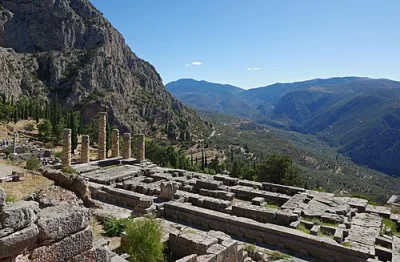
Ancient Greek divination was a complex system for seeking divine guidance through established methods, referred to as 'theopropia'. This practice was considered a form of magic by some, relying on a perceived connection between events and circumstances. Practitioners known as 'manteis' or prophets were distinct from priests, operating as independent religious specialists skilled in obtaining prophecies. The first recorded mantis in literature was Calchas, who served as an official prophet for the army. Military operations often involved manteis, as their pronouncements could significantly influence decisions, though errors or fraud carried severe penalties. Greek mantic culture featured both official, internationally recognized oracles and independent practitioners. Official oracles, like those at Delphi and Dodona, were divinely sanctioned institutions with their own temples and priesthoods, enjoying political neutrality and open access. The term 'oracle' in English encompasses both the pronouncement and the mantic center itself.
Practitioners and Methods
In ancient Greece, divination, or 'theopropia,' was the practice of seeking prophecies from deities. Specialists called 'manteis' (pl. 'manteis') were the primary practitioners, often translated as prophets or seers. Unlike priests ('hiereus'/'hiereia'), manteis were independent religious experts skilled in specific divination arts. The first known mantis in Greek literature was Calchas, who possessed knowledge of past, present, and future, attributed to Apollo. His 'mantosune,' or art of divination, was crucial for military leaders who rarely undertook major operations without consulting such specialists. The practice was considered a form of magic, based on a concept of 'sumpatheia,' or sympathy, between the divinatory event and the actual circumstance, a notion that was not universally accepted.
Official Oracles and Independent Consultants
Greek mantic culture was characterized by a duality between official and independent practitioners. Official oracles, such as those at Delphi and Dodona, were established institutions sanctioned by specific deities, operating from designated locations with their own priesthoods. These sites held significant political importance, offering sanctuary and access to delegations from various city-states. While the English word 'oracle' can refer to both the prophecy and the location, ancient Greeks used terms like 'manteion' or referred to the deity or location directly (e.g., 'Apollo said,' 'Delphi says'). Independent consultants, often hired by generals and statesmen, provided personalized divination, sometimes interpreting prophecies to align with leadership decisions, acknowledging the influence of popular belief among soldiers.
Deities of Divination
Several deities were central to Greek divination. Zeus, the king of the gods, was considered an arbiter of destiny and was associated with the oracle at Dodona. Apollo was the most prominent oracular deity, particularly linked to the oracle at Delphi, and was known for his supreme knowledge of the future, though his prophecies were often ambiguous. Apollo was believed to possess prophetic abilities from birth or to have learned them from Pan. Hermes was associated with cleromancy, or divination by lottery, receiving a lesser skill in this art from Apollo. Pan and the Nymphs were also linked to prophecy, particularly through inspirational states induced in caves and grottoes. Prometheus is credited with bestowing the gift of divination upon humanity.
Key Ideas
- Theopropia: The act of consulting divinity for prophecies.
- Mantis/Manteis: Independent religious specialists skilled in divination.
- Mantosune: The art or skill of divination.
- Sumpatheia: The presumed 'sympathy' or connection between divinatory signs and reality.
- Official Oracles: Institutionalized centers of divination (e.g., Delphi, Dodona).
- Cleromancy: Divination by lottery, associated with Hermes.