Michelle Northrup
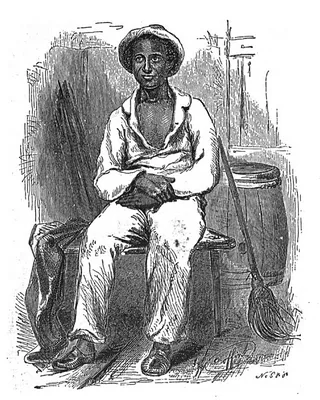
Solomon Northup, a free Black man, was kidnapped and enslaved for twelve years before regaining his freedom and writing his memoir.
Solomon Northup, born free in New York around 1807 or 1808, was the son of a freed slave and a free woman of color. He was a violinist, farmer, and landowner. In 1841, while working as a traveling musician, he was drugged and abducted into slavery in Washington, D.C. He was sold into bondage in Louisiana, where he endured nearly twelve years of enslavement in the Red River region. His freedom was eventually secured through the intervention of a Canadian worker who helped him contact his family, leading to the Governor of New York's assistance in his liberation in 1853.
Upon regaining his freedom, Northup authored the memoir "Twelve Years a Slave," detailing his harrowing experiences. He became an advocate for the abolitionist movement, delivering numerous speeches across the Northeast to campaign against slavery. Despite his efforts and the legal pursuit of his kidnappers, those responsible for his enslavement faced no punishment due to jurisdictional issues and discriminatory laws. Northup largely vanished from public record after 1857, with the circumstances of his death remaining unknown.
Early Life and Family
Solomon Northup was born in Minerva, New York, with a birth date estimated as either July 10, 1807, or July 10, 1808. His mother, described as a quadroon (one-quarter African, three-quarters European), was a free woman. His father, Mintus, was a formerly enslaved man who gained his freedom and adopted the surname Northup. Mintus was a farmer who owned land, enabling him to vote. Solomon and his brother received a good education for the time and assisted on the family farm. The family relocated several times within Washington County, New York. Solomon's father died in 1829, while his mother passed away during his enslavement, likely around 1846 or 1847.
Marriage and Adult Life
In late 1829, Solomon Northup married Anne Hampton, a woman of mixed African, European, and Native American descent. They settled in Washington County, eventually moving to Saratoga Springs in 1834 to pursue better employment opportunities. Anne was known for her culinary skills and worked in various hotels. They had three children: Elizabeth, Margaret, and Alonzo. Northup worked as a farmer, a horse-drawn taxi driver, and a musician, playing the violin at hotels. Despite their efforts, the family maintained a modest living but did not achieve significant prosperity during their seven years in Saratoga Springs.
Kidnapping and Enslavement
In March 1841, Northup accepted an offer to work as a traveling musician, which led him to Washington, D.C. While there, he was drugged, kidnapped, and sold into slavery. He was transported to New Orleans in April 1841 and subsequently held as a slave for nearly twelve years, primarily in Avoyelles Parish, Louisiana. During this period, he was known by the name "Platt." He endured harsh conditions and was subjected to the brutal realities of chattel slavery.
Reclamation of Freedom and Activism
Northup's liberation came in 1853 when a Canadian laborer on his plantation, Samuel Bass, helped him send word to his family in New York. With the assistance of Governor Washington Hunt, Northup was freed on January 3, 1853. In the same year, he published his memoir, "Twelve Years a Slave," which became a significant abolitionist text. He embarked on lecture tours across the Northeast, sharing his story to galvanize opposition to slavery. The legal attempts to prosecute his kidnappers were unsuccessful due to jurisdictional disputes and racial biases in the legal system at the time.
Later Years and Legacy
After his release and the publication of his memoir, Solomon Northup continued to advocate against slavery. He lived with his daughter and her family for a time and purchased land. However, his personal life appeared to be strained, with reports suggesting he struggled to overcome his enslavement and potentially developed a drinking problem. He became less visible in historical records after 1857, and the exact circumstances of his death remain unknown. His memoir has been adapted into notable film and television productions, most recently the acclaimed 2013 film "12 Years a Slave."
Books by Michelle Northrup
4 free public domain books · Read online or download