Meera Lester
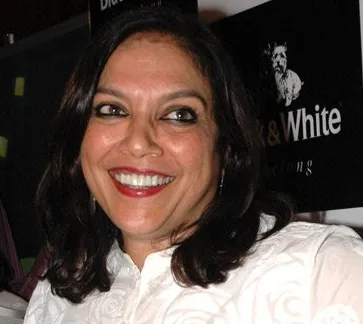
Mira Nair is an Indian-American filmmaker known for her socially conscious dramas and documentaries.
Mira Nair is an acclaimed Indian-American filmmaker, born in India in 1957. She began her career creating documentaries that often explored Indian cultural traditions and societal issues, such as gender preference in childbirth and the exploitation of women. Nair transitioned to feature films, frequently producing independent dramas through her company, Mirabai Films. Her directorial work is recognized for tackling political and controversial themes, often with a focus on human experience and cultural complexities.
Nair's films have garnered significant international recognition, including awards from the Cannes and Venice Film Festivals, and multiple award nominations such as Academy Awards and BAFTAs. She made history by becoming the first female director to win the Golden Lion at the Venice Film Festival for 'Monsoon Wedding.' Born and raised in India, she pursued higher education in the United States at Harvard University. Her career is marked by a strong directorial vision and a commitment to exploring diverse narratives.
Early Life and Influences
Born in Rourkela, India, on October 15, 1957, Mira Nair's upbringing was influenced by her parents and her Punjabi heritage. While her father, an administrative officer, was a somewhat distant figure who pushed his children academically, her mother, a social worker, fostered independence and social awareness. Nair felt that being overlooked as a girl provided her with the quiet space to pursue her interests without intense parental scrutiny. This early experience shaped her ability to follow her own path. Her education began in Rourkela and Bhubaneswar, later continuing at Loreto Convent in Shimla, where she developed a love for English literature. In her teenage years, she was a multi-talented individual, learning the sitar, painting, writing poetry, and performing in local theatre. She pursued sociology at Delhi University, where she actively participated in an amateur drama company and experimental theatre.
Transition to Filmmaking and Thematic Focus
After declining a scholarship to Cambridge, Nair moved to the U.S. in 1976 to attend Harvard University. Initially interested in acting, her involvement in theatre continued at Harvard. A pivotal moment came when she took a film class at MIT, which inspired her to concentrate on documentary filmmaking within Harvard's visual studies program. Her early documentaries, like 'Jama Masjid Street Journal' and 'So Far from India,' explored Indian culture and the immigrant experience, often focusing on themes of cultural isolation and societal norms. Her film 'India Cabaret' controversially depicted the lives of female strippers, challenging societal prejudices and patriarchal attitudes, though it also faced criticism for its perspective. 'Children of a Desired Sex' further addressed sensitive social issues, examining the societal preference for male children and its impact on women.
Feature Film Career and Recognition
Mira Nair's transition to feature films marked a significant expansion of her directorial scope. Her debut feature, 'Salaam Bombay!' (1988), earned critical acclaim and multiple award nominations, including an Academy Award. She continued to direct critically lauded films such as 'Mississippi Masala' (1991), 'Monsoon Wedding' (2001), 'Vanity Fair' (2004), 'The Namesake' (2006), and 'Queen of Katwe' (2016). 'Monsoon Wedding' was particularly impactful, making her the first female director to win the Golden Lion at the Venice Film Festival and achieving considerable box office success. Nair often produces her films through her company, Mirabai Films, and her work is characterized by its engagement with political themes and controversial subjects, while maintaining a strong focus on character and human emotion. Her films frequently explore the intersection of culture, identity, and social dynamics.
Key Ideas
- Exploration of cultural traditions and societal issues in India.
- Focus on the immigrant experience and cultural isolation.
- Tackling political themes and controversial topics in independent drama.
- Emphasis on human experience, identity, and social dynamics.
- Filmmaking as a collaborative art form, working with people and life.
Notable Quotes
“It's all in how I do it. Keeping the bums on the seats is very important to me. It requires that ineffable thing called rhythm and balance in movie-making. Foils have to be created, counter-weights. From the intimacy, let's say, of a love scene to the visceral, jugular quality of war. That shift is something in the editing, how one cuts from the intimate to the epic that keeps you there waiting. The energy propels you.”
“That's why I am neither a photographer nor writer, I like to work with people, and my strength, if any, is that. Working with life.”
Books by Meera Lester
4 free public domain books · Read online or download