Mary Shurtleff
Ernest Holmes founded Religious Science, a New Thought movement emphasizing the power of Universal Mind and directed thought.
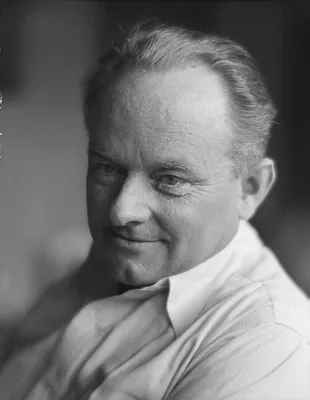
Ernest Holmes (1887-1960) was a significant figure in the New Thought movement, establishing Religious Science, also known as "The Science of Mind." Born in Maine, Holmes left home at 15 and, after studying at the Leland Powers School of Expression in Boston, was introduced to Christian Science. He later moved to California, where he and his brother studied various philosophical and spiritual writers.
Holmes began leading spiritual meetings in Los Angeles, which led to a nationwide tour and the publication of his first book, "The Creative Mind," in 1919. His seminal work, "The Science of Mind," was published in 1926, followed by the founding of "Science of Mind" magazine in 1927. He organized the Institute of Religious Science, which evolved into the Church of Religious Science. His teachings, which emphasize the power of Universal Mind and the ability to manifest desired outcomes through focused thought, continue to influence metaphysical students and have impacted the self-help movement.
Philosophy and Teachings
Ernest Holmes's philosophy, rooted in New Thought, posits that a Universal Mind, or God, creates physical reality by manifesting the dominant beliefs of all people. He taught that individuals can consciously direct this creative force by focusing their thoughts and beliefs. Holmes believed that sustained certainty in a particular outcome would inevitably bring it into being, asserting that positive beliefs lead to positive experiences and negative beliefs to negative ones. He stressed the importance of refuting negative conditions by recognizing the unlimited nature of Mind, comparing its creative capacity to that of making a planet or an acorn. His approach aimed to demonstrate the practical, scientific provability of these principles, viewing them as a "Golden thread of truth" present in all religions, science, and philosophy.
Founding of Religious Science
After gaining experience through private meetings and public speaking engagements, including at the Metaphysical Library in Los Angeles, Ernest Holmes formally established his spiritual movement. In 1927, he incorporated the Institute of Religious Science and School of Philosophy, Inc., and began publishing "Science of Mind" magazine, which has remained in continuous publication. The organization underwent further restructuring, becoming the Church of Religious Science in 1954. Holmes's teachings, centered on "The Science of Mind," were presented in a Christian context and gained considerable traction, leading to lectures in increasingly larger venues. His work continues today through various organizations, including the Centers for Spiritual Living.
Recognition and Legacy
Ernest Holmes received several honorary distinctions for his contributions to spiritual and philosophical thought. In 1945, Andhra University in India awarded him an honorary Doctor of Philosophy. The California College of Medicine and the Foundation Academic University of Spiritual Understanding in Venice, Italy, granted him a Doctor of Letters. He was also recognized with the Cross of the Commander of the Grand Humanitarian Prize of Belgium in 1942 and was named an honorary member of the Eugene Field Society in 1944. His prolific writings, including "The Science of Mind" and "The Creative Mind," continue to be published and have influenced generations of metaphysical thinkers and practitioners.
Key Ideas
- Universal Mind/God as the source of all creation.
- The power of directed thought and belief to manifest reality.
- The importance of focusing on good to create positive experiences.
- The concept of 'denial' as a refutation of limitation.
- The scientific provability of spiritual principles.
Notable Quotes
“There is a Universal Mind, Spirit, Intelligence, that is the origin of everything: It is First Cause. It is God. This Universal Life and Energy finds an outlet in and through all that is energized, and through everything that lives.”
“Experience has taught us that the subjective tendency of this intelligent Law of creative force may consciously be directed and definitively used. This is the greatest discovery of all time.”
“Never look at that which you do not wish to experience. No matter what the false condition may be, it must be refuted. The proper kind of denial is based upon the recognition that, in reality, there is no limitation, for Mind can as easily make a planet as an acorn. The Infinite knows no difference between a million dollars and a penny. It only knows that IT IS.”
“So plastic is mind, so receptive, that the slightest thought makes an impression upon it. People who think many kinds of thought must expect to receive a confused manifestation in their lives. If a gardener plants a thousand kinds of seeds, he will get a thousand kinds of plants; it is the same in mind.”
Books by Mary Shurtleff
2 free public domain books · Read online or download