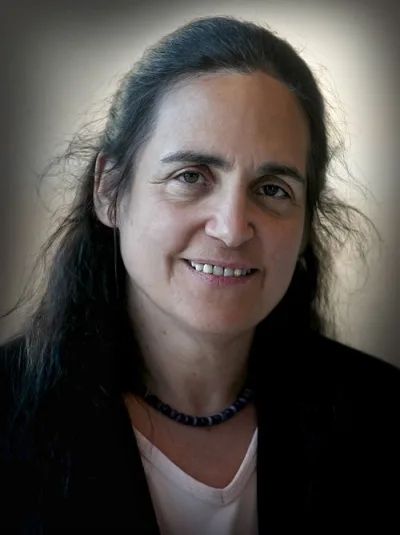
Margot Adler was an author, journalist, and Wiccan priestess known for her seminal work on Neopaganism, Drawing Down the Moon.
Margot Adler was an American author, journalist, and lecturer who spent 35 years as a correspondent for NPR, eventually becoming bureau chief of its New York office. She was also a Wiccan high priestess and author of "Drawing Down the Moon," a foundational text on Neopaganism in America. Born in 1946, Adler was the granddaughter of psychologist Alfred Adler and the daughter of left-wing parents. Her early life was marked by her family's experiences fleeing persecution and her own immersion in the political activism of the 1960s, including participation in the Free Speech Movement at UC Berkeley and efforts to register Black voters in Mississippi. These experiences shaped her worldview and were later chronicled in her autobiographical work, "Heretic's Heart."
Adler pursued a career in journalism, earning a master's degree from Columbia University and becoming a Nieman Fellow at Harvard. Her extensive career in radio included creating talk shows like "Hour of the Wolf" and reporting for NPR on a wide range of topics. Her spiritual path led her to Neopaganism, which she saw as aligned with her feminist views and critical of religious monotheism. She was an elder in the Covenant of the Goddess and also involved with the Unitarian Universalist faith community. Adler passed away in 2014.
Neopaganism and Spirituality
Margot Adler was a prominent figure in the Neopagan community, holding the title of Wiccan high priestess and serving as an elder in the Covenant of the Goddess. Her seminal work, "Drawing Down the Moon: Witches, Druids, Goddess-Worshippers, and Other Pagans in America," first published in 1979 and revised in 2006, is considered a landmark study of modern nature-based religions in the United States. For many years, it served as the primary introduction to American Neopaganism. Adler viewed paganism as a spiritual expression of her feminism, finding resonance in its rejection of the hierarchical structures of monotheism, which she characterized, following historian James Breasted, as "imperialism in religion." She also participated in the Unitarian Universalist faith community, bridging different spiritual traditions.
Journalism and Public Voice
Adler established a significant career in journalism, dedicating 35 years as a correspondent for National Public Radio (NPR). Her work at NPR included reporting for widely heard programs like "All Things Considered" and "Morning Edition," and she rose to become the bureau chief of the New York office. Prior to her long tenure at NPR, she worked at Pacifica radio, where she developed influential talk shows such as "Hour of the Wolf." Her journalistic endeavors covered a diverse array of subjects, from the death penalty and the right-to-die movement to emerging cultural phenomena like computer gaming and Pokémon. Following the September 11th attacks, she focused on reporting the human impact of the event in New York City. She also hosted "Justice Talking" and co-produced the radio drama "War Day."
Early Life and Activism
Born in 1946, Margot Adler was the granddaughter of noted psychologist Alfred Adler. Her upbringing was influenced by her parents' left-wing political leanings and her family's history of seeking refuge from political persecution, having fled Europe due to anti-Trotskyist factions. This background, coupled with her education at a liberal school in Manhattan, fostered an early engagement with social and political issues. During her time as a student at UC Berkeley in the 1960s, she became actively involved in the Free Speech Movement, participating in protests that led to mass arrests, and she willingly served 90 days in jail for her activism. She also volunteered for the Democratic Freedom Party in Mississippi, aiming to register African American voters, an experience that further shaped her understanding of societal divisions and her own sense of alienation.
Key Ideas
- Neopaganism as a modern, nature-based religion
- Feminist critique of monotheism
- Social interest as a concept influencing cooperation
- The role of spiritual activism
Notable Quotes
“an alien in America”
“raised by left-wing parents”
“The only thing that was beaten in my head was the Adlerian notion of ‘social interest,’ which, while never clearly defined in my youth, seemed to have something to do with being cooperative and merging your individual desires with the needs of society—like socialism”
“my utopia, and the place that remained whole and intact and vibrant, even when my own family fell apart”
“I was way over my head in the strange land of Richard Nixon’s Washington. On the outside I tried to look reasonably ‘straight’ and presentable; I spoke softly and politely. On the inside I was raging.”
Books by
3 free public domain books · Read online or download