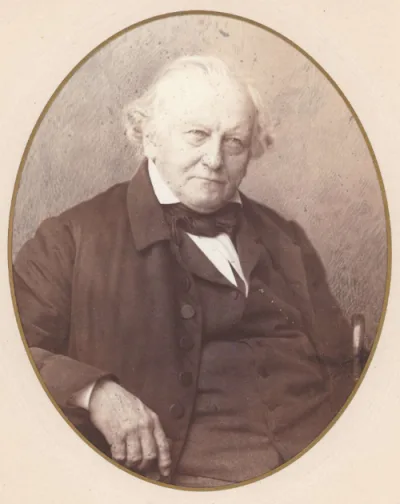
Manik Chand Jain
Meenakshi Jain is an Indian historian recognized for her work on medieval India, religious developments, and temple histories, receiving the Padma Shri.
Meenakshi Jain is an Indian political scientist and historian known for her academic contributions, particularly concerning cultural and religious developments in medieval and early modern India. She has served as an associate professor of history at Gargi College, Delhi, and her research interests include the historical trajectory of prominent Indian religious sites.
Jain's academic career has been marked by significant appointments and recognition. She was nominated to the Indian Council of Historical Research and has authored several books and a school textbook. Her work often focuses on indigenous perspectives and the continuity of Indian civilization, particularly in relation to religious traditions and historical narratives. In 2020, she was honored with the Padma Shri, India's fourth-highest civilian award, for her achievements in literature and education.
Academic and Research Focus
Meenakshi Jain's academic background is in political science, with a Ph.D. from the University of Delhi, though her career has primarily focused on history. She has held positions such as an associate professor of history at Gargi College and a fellow at the Nehru Memorial Museum and Library. Her research delves into the cultural and religious transformations of medieval and early modern India. Jain advocates for a 'decolonial' approach to history, emphasizing indigenous viewpoints and the role of common people in shaping Indian civilization. She has also explored the historical narratives surrounding religious sites, such as the Kashi Vishwanath temple, arguing for their continuous spiritual significance and reconstruction by Hindus throughout various periods of rule.
Key Works and Interpretations
Among Jain's notable books are 'Sati: Evangelicals, Baptist Missionaries, and the Changing Colonial Discourse,' 'The Battle for Rama: Case of the Temple at Ayodhya,' and 'Flight of Deities and Rebirth of Temples.' She also authored a school history textbook, 'Medieval India,' for NCERT. Her writings on the Ayodhya dispute have been described as sophisticated compilations of sources, though some critics suggest selective use of evidence. Jain's work often challenges prevailing historical interpretations, particularly concerning inter-religious relations, proposing that narratives of conflict were sometimes amplified by colonial policies. Her book 'Vishwanath Rises and Rises: The Story of Eternal Kashi' details the temple's historical continuity.
Recognition and Reception
Jain's contributions have garnered significant recognition, including the Padma Shri award in 2020 for her work in literature and education. Her nomination to the Indian Council of Historical Research by the Indian government further highlights her standing. However, her textbook 'Medieval India' has faced criticism. Some scholars, like Martha Nussbaum, have characterized it as presenting a 'clash-of-civilizations' narrative and serving a political mission, while others noted its literary merit compared to other texts in the series. Nandini Sundar viewed the textbook as negating the contributions of Sultanate and Mughal rulers and fitting a pattern of state-induced historical negationism.
Key Ideas
- Advocacy for a 'decolonial' approach to historiography, prioritizing indigenous perspectives.
- Emphasis on the role of common people in building and preserving Indian civilization.
- Argument that historical narratives of conflict between indigenous faiths were influenced by colonial 'divide and rule' strategies.
- Focus on the continuous historical and spiritual significance of Indian religious sites, often highlighting their rebuilding by Hindus.
Books by Manik Chand Jain
2 free public domain books · Read online or download