Lu Sheng-yen
Water Margin is a classic Chinese novel about 108 outlaws who rebel and later serve the government, attributed to Shi Nai'an.
Water Margin, also known as Outlaws of the Marsh, is a foundational Chinese novel from the Ming dynasty, traditionally attributed to Shi Nai'an. Set in the Northern Song dynasty, it chronicles the rise of 108 outlaws who gather at Liangshan Marsh to oppose the government. The narrative details their eventual amnesty and subsequent enlistment by the state to combat external invaders and internal rebels.
The novel draws inspiration from historical accounts of the outlaw Song Jiang and his companions, as well as existing folk tales and earlier literary compilations. Its authorship and precise historical context have been subjects of academic debate. Water Margin is celebrated as a masterpiece of early vernacular Chinese literature, introducing memorable characters and significantly influencing East Asian fiction.
Origins and Historical Influences
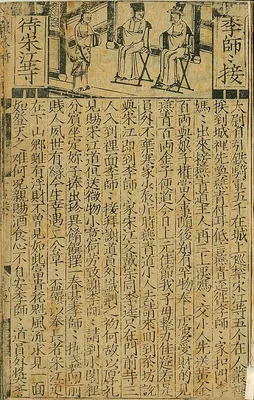
The novel is rooted in the historical exploits of Song Jiang and his 107 associates, who are presented in the story as incarnations of 108 stars. Historical records, such as the History of Song, document Song Jiang's group and their eventual suppression by General Zhang Shuye. A significant precursor is the compilation of folk tales known as Old Incidents in the Xuanhe Period of the Great Song Dynasty, which also touches upon corrupt Song dynasty officials and the heroes of Liangshan. Further elements, like the character Yan Qing, appear in contemporary works such as Gong Kai's Praise of the Thirty-six Men of Song Jiang. Folk narratives about Song Jiang circulated widely, with early lists of his companions appearing in 13th-century texts. Theories suggest real individuals like Shi Bin and Xie Bao may have inspired certain outlaw characters, while Fang La, a primary antagonist, is based on a historical rebel leader whose uprising was linked to Manichaeism.
Narrative Arc and Themes
The plot commences with the release of 108 Spirits and details the rise of antagonists like Gao Qiu. It follows the journeys of key figures such as Shi Jin, Lu Zhishen, and Lin Chong, who eventually find their way to Liangshan Marsh. The narrative describes the formation of the outlaw band, initially led by Chao Gai and later by Song Jiang after Chao Gai's death. A significant turning point is the outlaws' acceptance of amnesty from Emperor Huizong, after which they are tasked with military campaigns against the Liao dynasty and internal rebellions led by Tian Hu, Wang Qing, and Fang La. Despite their victories, these campaigns lead to the tragic demise of many heroes, with the survivors either receiving honors or returning to civilian life. The novel concludes with Song Jiang's death by poisoning, orchestrated by corrupt officials.
Character Cosmology and Structure
Central to Water Margin are the 108 Heroes, understood within a Taoist framework as the Stars of Destiny. These figures are depicted as 108 demonic overlords originally banished by the deity Shangdi. Having shown repentance, they are reborn into the world as heroes united for justice, divided into the 36 Heavenly Spirits and the 72 Earthly Fiends. The novel's structure varies across different editions, with a 100-chapter version being common, while others extend the narrative to include additional campaigns or abridge certain plotlines, such as the outlaws' acceptance of amnesty and subsequent military actions.
Key Ideas
- The 108 Stars of Destiny as reincarnated demonic overlords seeking justice.
- Rebellion against corrupt government and the pursuit of amnesty.
- The influence of historical events and folk legends on fictional narratives.
Books by Lu Sheng-yen
0 free public domain books · Read online or download