Life's A. Beach Tarot
Tarot's esoteric use began in the 18th century, with occultists creating a false history linking it to ancient Egypt and mysticism.
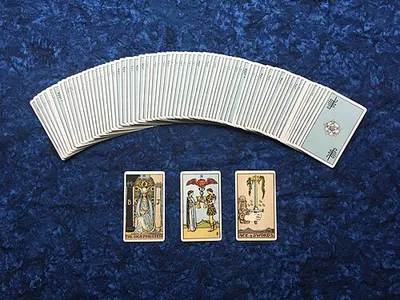
The practice of tarot card reading, a form of cartomancy, involves using a deck of cards to gain insight into the past, present, or future. While traditional decks have 78 cards divided into Major and Minor Arcana, other card systems can also be utilized. The historical origins of tarot cards trace back to 15th-century Italy as a game called 'carte da trionfi'. It wasn't until the late 18th century that tarot cards began to be used for divination, a practice that significantly diverged from their initial purpose.
Early French occultists, such as Antoine Court de Gébelin and later Etteilla, were instrumental in developing the esoteric interpretations of tarot. They proposed unfounded links to ancient Egypt, the Kabbalah, and other mystical traditions, essentially fabricating a new history for the cards. Court de Gébelin erroneously linked the name 'Tarot' to Egyptian words and attributed divine significance to the cards. Etteilla further developed cartomancy, assigning divinatory meanings and creating the first 'Egyptian tarot' decks. These occult interpretations, despite lacking historical evidence, have profoundly shaped the modern understanding of tarot.
Historical Origins and Esoteric Development
Tarot cards first appeared in northern Italy between 1440 and 1450, initially as 'carte da trionfi' or triumph packs, which added allegorical cards to standard playing card decks. For centuries, these cards were used exclusively for games. The shift towards divination and esoteric interpretation began much later, around the 1780s, after fortune-telling with regular playing cards had already been established. Despite scholarly research indicating no evidence of divinatory use until the late 18th century, occultists propagated a narrative of ancient origins, linking tarot to Egypt, the Kabbalah, and other mystical systems. This 'false history' was a successful propaganda campaign that became widely accepted.
Pioneers of Esoteric Tarot
Antoine Court de Gébelin, a French clergyman, was among the first to assert an ancient Egyptian origin for tarot in 1781, proposing mystical and divine significance. He derived the name 'Tarot' from fabricated Egyptian roots and linked cards to Egyptian deities and Christian virtues. His theories, however, lacked linguistic support from Egyptologists. Following Court de Gébelin, Major General Louis-Raphaël-Lucrèce de Fayolle, Comte de Mellet, further expanded these ideas, notably proposing tarot as 'The Book of Thoth' and associating it with cartomancy. Etteilla (Jean-Baptiste Alliette) was the first to systematically assign divinatory meanings to tarot cards, establishing a society for cartomancy and promoting 'Egyptian tarot' decks.
Éliphas Lévi and Modern Occultism
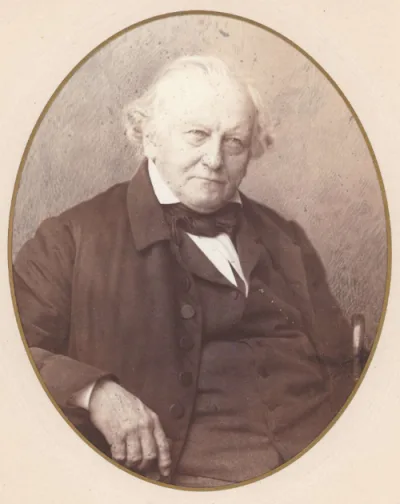
Éliphas Lévi (Alphonse-Louis Constant) significantly influenced the modern occultist movement by conceptualizing tarot as a mystical key. He accepted the Egyptian origin theory but reinterpreted the Tarot de Marseille, calling it 'The Book of Hermes' and a universal key to knowledge and magic. Lévi proposed connections between the Major Arcana and the Hebrew alphabet, linking them to Qabalistic concepts and the ten sefiroth. He also suggested the numbered cards represented the sefiroth, court cards symbolized stages of life, and the suits corresponded to the Tetragrammaton. His work in 'Dogme et rituel' became foundational for subsequent occult tarot practices.
Key Ideas
- Tarot's esoteric interpretation originated in the late 18th century, not from ancient times.
- Occultists fabricated a false history linking tarot to ancient Egypt and mystical traditions.
- Court de Gébelin and Etteilla were early proponents of esoteric tarot interpretations.
- Éliphas Lévi integrated tarot into occult philosophy, linking it to Qabalah and Hermeticism.
Notable Quotes
“it was only in the 1780s, when the practice of fortune-telling with regular playing cards had been well established for at least two decades, that anyone began to use the tarot pack for cartomancy.”
“the subject of the most successful propaganda campaign ever launched... An entire false history and false interpretation of the Tarot pack was concocted by the occultists; and it is all but universally believed”
“the whole of the modern occultist movement stems.”
“have discovered intact and still unknown this key of all doctrines and all philosophies of the old world... without the tarot, the Magic of the ancients is a closed book....”
“An imprisoned person with no other book than the Tarot, if he knew how to use it, could in a few years acquire universal knowledge, and would be able to speak on all subjects with unequaled learning and inexhaustible eloquence.”
Books by Life's A. Beach Tarot
2 free public domain books · Read online or download