Léo Bronstein
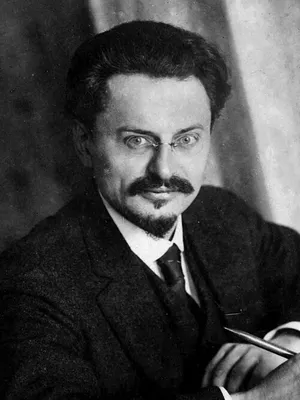
Lev Bronstein, known as Leon Trotsky, was a pivotal Russian revolutionary and theorist whose ideas shaped Marxism.
Born Lev Davidovich Bronstein in 1879, Leon Trotsky was a central figure in the Russian Revolution and the early Soviet Union. He was a prominent Marxist theorist, co-leading the October Revolution and establishing the Red Army. Initially a member of the Russian Social Democratic Labour Party, he experienced periods of exile and imprisonment for his revolutionary activities. Trotsky's intellectual contributions led to the development of Trotskyism, a distinct school of Marxist thought. He was a key leader in the Soviet state alongside Vladimir Lenin, but later became a vocal critic of Joseph Stalin, leading to his expulsion from the party and eventual exile from the Soviet Union in 1929.
In exile, Trotsky continued to write, developing his theories on permanent revolution and critiquing Stalinism. He advocated for proletarian internationalism and founded the Fourth International as an alternative to the Comintern. Despite his significant role in Soviet history, he was assassinated in Mexico in 1940 by a Stalinist agent. In the West, he is often remembered as a hero of the anti-Stalinist left for his defense of democratic socialism against totalitarianism.
Early Life and Revolutionary Beginnings
Lev Davidovich Bronstein was born in 1879 to a Jewish farming family in Ukraine. He received his early education in Odessa, excelling academically and developing a broad intellectual curiosity. By 1896, he was deeply involved in revolutionary activities, initially as a populist but soon embracing Marxism. His early organizing efforts led to his arrest in 1898, followed by imprisonment and exile to Siberia. During this period, he joined the Russian Social Democratic Labour Party and began to solidify his political and theoretical positions, studying Marx and engaging with emerging party debates.
Rise to Prominence and Revolutionary Leadership
After escaping Siberian exile in 1902, Bronstein, now using the pseudonym Leon Trotsky, moved to London. There, he connected with other revolutionaries, including Lenin, and became a significant writer for the party's publication, Iskra. He played a crucial role in the 1905 Revolution, chairing the Saint Petersburg Soviet, and again faced exile. Following the February Revolution of 1917, Trotsky joined the Bolsheviks, becoming chairman of the Petrograd Soviet and a key leader in the October Revolution. As People's Commissar for Foreign Affairs, he negotiated Russia's withdrawal from World War I, and later, as People's Commissar for Military Affairs, he was instrumental in building and leading the Red Army to victory in the Civil War.
Political Struggles and Exile
After Lenin's death in 1924, Trotsky became a prominent critic of Joseph Stalin. He led the Left Opposition within the party, advocating for policies such as increased industrialization and democratization. However, Stalin gradually outmaneuvered him, leading to Trotsky's expulsion from the Politburo in 1926 and the party in 1927. He was exiled first within the Soviet Union and then deported entirely in 1929. Settling in Mexico in 1937 after living in several other countries, Trotsky continued his political and theoretical work, denouncing Stalinism and elaborating on his theory of permanent revolution.
Theoretical Contributions and Legacy
Trotsky's intellectual legacy is significant, particularly his development of Marxist theory, which inspired the school of thought known as Trotskyism. His concept of 'permanent revolution' posited that socialist revolution could only succeed if it spread internationally. In exile, he authored works like 'The Revolution Betrayed,' analyzing the Soviet Union as a 'degenerated workers' state.' He also founded the Fourth International in 1938 as a revolutionary alternative to the Comintern. Despite being officially erased from Soviet history under Stalin, Trotsky remains a significant figure for his critique of Stalinist totalitarianism and his advocacy for a more democratic, internationalist form of socialism.
Key Ideas
- Trotskyism: A school of Marxism based on Trotsky's ideas.
- Permanent Revolution: The theory that socialist revolution must spread internationally to survive.
- Proletarian Internationalism: Advocating for international solidarity of the working class.
- Critique of Stalinism: Denunciation of Stalin's policies and the nature of the Soviet state under his rule.
Books by Léo Bronstein
0 free public domain books · Read online or download