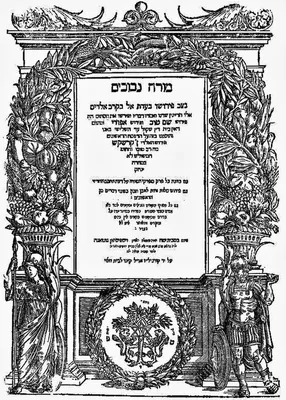
Le N Hebreo
Judah Leon Abravanel was a Portuguese-Jewish philosopher, physician, and poet whose influential "Dialogues of Love" explored philosophical concepts.
Judah Leon Abravanel, also known as Leo the Hebrew, was a prominent Portuguese-Jewish philosopher, physician, and poet born around 1460 in Lisbon. He hailed from the esteemed Abravanel family, known for their involvement in public service and finance. His father, Isaac Abravanel, was a significant statesman and biblical commentator. Judah himself served as a personal physician to the Catholic Monarchs of Spain starting in 1484. The family faced significant upheaval in 1492 with the expulsion of Jews from Spain, an event that deeply affected Judah. After fleeing Spain, the family settled in Naples, where his father advised the king. Judah, however, moved through various Italian cities, including Genoa and Venice, engaging with humanist circles and continuing his intellectual pursuits. His most significant work, "Dialogues of Love," was likely written around 1501-1502 and published posthumously in 1535. Despite claims of his conversion to Christianity, evidence suggests he remained true to his Jewish faith throughout his life.
Abravanel's philosophical work was deeply influenced by Plato and Aristotle, filtered through the lens of Jewish Neoplatonism, drawing inspiration from scholars like Solomon ibn Gabirol and Maimonides. He was also immersed in the humanist intellectual environment of Renaissance Italy, associating with prominent thinkers of the era. His "Dialogues of Love" is considered a seminal work of Platonic philosophy and was exceptionally popular, being translated into several languages. It was notable for being one of the first original philosophical compositions published in the vernacular, rather than Latin. The work itself is structured as a philosophical conversation exploring the nature of love and desire.
Family Background and Early Life
Judah Leon Abravanel was born into the distinguished Abravanel family, a lineage deeply involved in Jewish communal life and public service, particularly within the courts of medieval Europe. His father, Isaac Abravanel, was a notable figure, serving as a statesman, financier, and a respected biblical commentator. The family's prominence led them to Lisbon, Portugal, where Isaac held a financial advisory role for King Afonso V. However, political suspicions following the king's death in 1481 forced Isaac to flee Portugal, seeking refuge in Spain. Judah later joined his father in Seville and then Toledo, eventually entering the service of the Catholic Monarchs of Spain as a personal physician in 1484.
Exile and Intellectual Pursuits
The year 1492 marked a profound turning point for the Abravanel family with the Alhambra Decree, mandating the expulsion or forced conversion of Jews from Spain. Despite his father's desperate attempts to prevent it, the family faced immense pressure. A plot to kidnap Judah's son, intended to force the family's conversion, led to the boy's seizure and baptism, a deeply distressing event for Judah. Choosing exile over conversion, the family eventually settled in Naples, Italy, where Isaac continued his advisory role. Judah, however, moved between various Italian cities, including Genoa and Venice, immersing himself in humanist intellectual circles. During this period, he likely began composing his most famous work, "Dialogues of Love."
Philosophical Contributions and "Dialogues of Love"
Judah Leon Abravanel's "Dialogues of Love" (Dialoghi d'amore) is his most significant contribution, widely regarded as a major philosophical text of its time. The work, structured as a philosophical conversation between Philo (representing love) and Sophia (representing wisdom), delves into the nature of love and desire. It is notable for being one of the earliest original philosophical treatises published in a vernacular language, rather than Latin. Abravanel's philosophical framework was deeply rooted in Jewish Neoplatonism, drawing heavily from thinkers like Plato and Aristotle, but interpreted through the traditions of Jewish scholarship, particularly the works of Solomon ibn Gabirol and Maimonides. The book's popularity led to multiple editions and translations into various languages, solidifying its influence on subsequent philosophical discourse.
Key Ideas
- Exploration of the philosophical nature of love and desire through dialogue.
- Synthesis of Platonic and Aristotelian philosophy with Jewish Neoplatonism.
- Emphasis on reaching towards ideals of beauty, wisdom, and perfection.
Books by Le N Hebreo
0 free public domain books · Read online or download
