Kuo Lien Ying
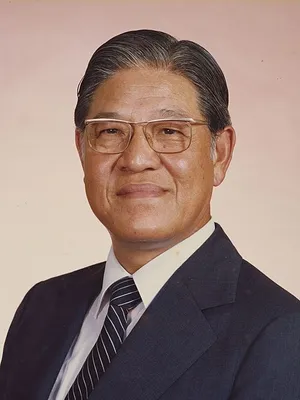
Lee Teng-hui was a Taiwanese statesman, economist, and agronomist who served as president, overseeing Taiwan's democratic transition.
Lee Teng-hui was a prominent Taiwanese statesman, economist, and agronomist who held the office of President of the Republic of China and chaired the Kuomintang (KMT) from 1988 to 2000. Notably, he was the first president born in Taiwan and the first to be directly elected, marking a significant shift in the nation's political landscape. His early life was shaped by Japanese colonial rule, leading to education at Kyoto Imperial University and service in the Imperial Japanese Army during World War II. After the war, he pursued agricultural economics in the United States, earning a doctorate from Cornell University and beginning a career in academia.
During his presidency, Lee was instrumental in ending martial law and advancing democratic reforms in Taiwan. He championed the Taiwanese localization movement and sought to increase the country's international standing. His leadership is widely credited with completing Taiwan's transition to a democratic state. Following his presidency, Lee remained an influential figure in Taiwanese politics, particularly supporting the pro-independence Taiwan Solidarity Union. He also focused on fostering relations between Taiwan and Japan.
Early Life and Education Under Colonial Rule
Born in 1923 in a rural area of Taiwan under Japanese rule, Lee Teng-hui hailed from a Hakka Chinese background. His father served the colonial government as a policeman. Lee received his early education in schools that taught both Chinese and Japanese, memorizing Confucian classics. He attended multiple elementary schools due to his father's frequent transfers. Despite excelling academically, he faced rejection from top middle schools that favored Japanese students. He eventually enrolled in a private middle school in Taipei. As a child, he developed interests in Zen Buddhism, Western classical music, and philosophy, reading works by figures like Nietzsche and Goethe in Japanese. His education was further shaped by the Japanese colonial government's wartime reforms, which included martial arts training and military drills. In 1940, his father adopted Japanese names for the family, and Lee later recalled considering himself Japanese until the age of 22.
Higher Education and Wartime Service
Lee graduated from middle school in 1941 and was admitted to Taihoku Higher School, a prestigious institution for students aiming for university. He chose to study agricultural economics, intending to work for the Southern Manchuria Railway Company, though history was his preferred subject. He was an avid reader with broad interests, studying Japanese culture extensively and being influenced by figures like Motoori Norinaga and Nitobe Inazō. His reading included Japanese literature and translations of Western philosophy and physics. In 1943, he traveled to Japan to attend Kyoto Imperial University on a scholarship, studying in the Faculty of Agriculture. He was particularly interested in Karl Marx and Marxist economics. His studies were interrupted by World War II, and he volunteered for the Imperial Japanese Army. He served in an anti-aircraft unit, trained at an academy in Chiba Prefecture, and was commissioned as a second lieutenant. Stationed in Nagoya, he witnessed the city's bombing and assisted civilians. After Japan's surrender, he was discharged and returned to Taiwan in 1946.
Post-War Academic Career and Political Ascent
Upon returning to Taiwan in 1946, Lee re-enrolled at Kyoto University and graduated. He then pursued further studies in agricultural economics in the United States, earning his doctorate from Cornell University in 1968. This marked the beginning of his career as an economics professor. As a member of the Kuomintang (KMT), Lee's political career advanced when he was appointed Mayor of Taipei in 1978. He subsequently became the governor of Taiwan Province in 1981, serving under President Chiang Ching-kuo. Following Chiang's death in 1988, Lee succeeded him as president, ascending to the highest office in the Republic of China.
Books by Kuo Lien Ying
0 free public domain books · Read online or download
