Knights Templar Masonic Order
The Knights Templar were a medieval Catholic military order that protected pilgrims and developed early banking, later dissolved amidst controversy.
The Poor Fellow-Soldiers of Christ and of the Temple of Solomon, widely known as the Knights Templar, were a significant Catholic military order established in 1118. Their initial purpose was to safeguard Christian pilgrims traveling to Jerusalem, with their headquarters situated on the Temple Mount. Endorsed by the Church, the order quickly gained influence and membership throughout Western Christianity.
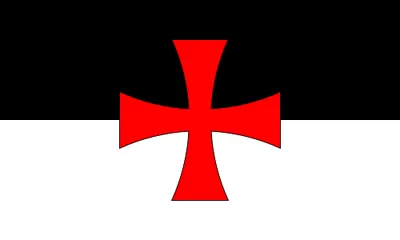
The Templars were recognized for their distinctive white mantles adorned with a red cross and were skilled combatants during the Crusades. Beyond their military role, a large proportion of their members managed extensive financial operations across Christendom, pioneering financial techniques that constituted an early form of banking. They established a vast network of commanderies and fortifications. However, their influence waned as their holdings in the Holy Land became precarious. In 1307, King Philip IV of France orchestrated the arrest and persecution of many Templars, leading to forced confessions and executions. Pope Clement V officially disbanded the order in 1312. Despite their dissolution, remnants and assets were absorbed by other orders, and the Templar legacy has persisted through subsequent speculation and popular culture.
Origins and Early Mission
Following the First Crusade's capture of Jerusalem in 1099, Christian pilgrimages to the Holy Land increased. However, these journeys were perilous due to banditry and violence. In response, the French knight Hugues de Payens proposed the formation of a monastic Catholic order dedicated to protecting these pilgrims. King Baldwin II of Jerusalem and Patriarch Warmund granted this request, likely in 1120. The nascent order, initially comprising about nine knights and facing financial hardship, was given a base on the Temple Mount. Their early emblem, depicting two knights on a single horse, symbolized their initial poverty.
Growth and Papal Endorsement
The Templars' fortunes improved significantly with the support of influential figures like Saint Bernard of Clairvaux. Bernard's advocacy, notably in his writing "In Praise of the New Knighthood," was instrumental in gaining official Church approval at the Council of Troyes in 1129. This endorsement transformed the Templars into a favored charity across Christendom, attracting donations, land, and recruits. Papal bulls, such as "Omne Datum Optimum" from Pope Innocent II in 1139, granted the order significant privileges, including exemption from local laws and taxes, allowing them to operate freely across borders, answerable only to the Pope. This papal backing fueled their rapid expansion and accumulation of resources.
Military and Financial Infrastructure
The Knights Templar became a formidable military force, often serving as elite shock troops in Crusader battles, renowned for their heavily armored charges. Their participation was crucial in significant victories, such as the Battle of Montgisard in 1177. While combatants were a minority, the majority of Templars managed a complex financial network. They accepted the management of secular nobles' assets during Crusades and developed innovative financial instruments like letters of credit, which functioned as an early form of banking, protecting pilgrims and enhancing the Order's wealth. This financial acumen allowed them to acquire vast properties, engage in trade, construct fortifications and cathedrals, and even own fleets and territories like Cyprus, leading some to consider them the world's first multinational corporation.
Dissolution and Legacy
The Templars' prominence declined as their position in the Holy Land weakened. In 1307, King Philip IV of France initiated a crackdown, arresting many Templars and subjecting them to torture to extract false confessions. Under pressure from Philip, Pope Clement V dissolved the order in 1312. Despite their official end, some Templar knights, properties, and assets were integrated into the Portuguese Order of Christ and the Spanish Order of Montesa between 1317 and 1319. The abrupt disappearance of such a powerful medieval institution has fueled centuries of speculation and legend, ensuring the "Templar" name's continued presence in various modern self-styled orders and popular culture.
Books by Knights Templar Masonic Order
0 free public domain books · Read online or download
