Kathryn Rountree is an anthropologist recognized for her academic study of modern paganism as a new religious phenomenon.
Kathryn Rountree is an anthropologist who has contributed to the academic understanding of modern paganism. Her work, as reflected in scholarly discussions, describes paganism as a "new religious phenomenon." This categorization places contemporary pagan movements within the broader study of new religious movements, acknowledging their distinct identity and development in the modern era.
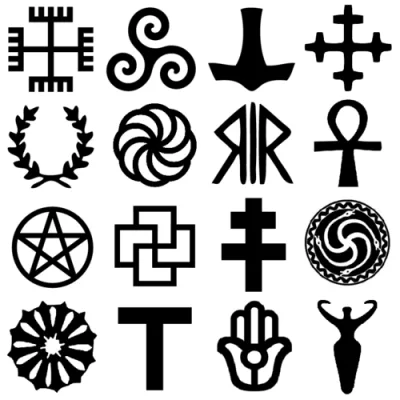
Modern paganism, also known as neopaganism or contemporary paganism, encompasses a wide array of religious and spiritual traditions influenced by pre-Christian beliefs from Europe, North Africa, and the Near East. These movements are characterized by their diversity, lacking a single set of doctrines or texts. Scholars often view them as distinct religions or as a decentralized religion with various denominations. Adherents draw on historical, folkloric, and ethnographic sources to varying degrees, with some seeking to reconstruct ancient practices and others creating eclectic blends of traditions. Common theological threads include polytheism, animism, and pantheism, though secular and humanistic interpretations also exist, viewing deities as archetypes or metaphors.
Academic Classification of Paganism
Kathryn Rountree, in her academic capacity as an anthropologist, has characterized modern paganism as a "new religious phenomenon." This classification is significant within the field of pagan studies, which itself began to coalesce in the 1990s. Scholars like Rountree contribute to understanding the diverse spectrum of contemporary pagan movements, which are often studied as new religious movements (NRMs). This perspective acknowledges their distinctiveness from older, established religions while recognizing their roots in pre-Christian belief systems. The academic study of paganism navigates complexities, with some scholars viewing it as a collection of separate religions and others as a single, decentralized faith with denominations.
Terminology and Identity in Paganism
The terminology surrounding modern paganism is a subject of ongoing academic discussion, with contributions from scholars like Kathryn Rountree. Rountree has noted the convention in pagan studies regarding the use of capitalization, specifically observing in 2015 that the distinction between "Paganism" (for the modern movement) and "paganism" (for ancient beliefs) had become standard. This distinction aims to differentiate contemporary expressions of paganism from their historical predecessors. However, the use of terms like "neopaganism" is sometimes debated by practitioners who prefer not to use the "neo-" prefix, feeling it disconnects them from their perceived ancient heritage. Other terms like "modern paganism" or "contemporary paganism" are often favored by scholars to avoid offense and accurately reflect the current nature of these spiritual paths.
Key Ideas
- Modern paganism as a "new religious phenomenon"
- The academic convention of capitalizing "Paganism" to distinguish modern movements from ancient beliefs
Notable Quotes
“now [the] convention”
Books by
2 free public domain books · Read online or download