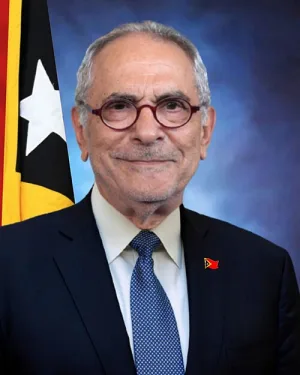
✍️ Author Biography
Kate Rheeders
📅 1964 – 1985
🌍 American
📚 2 free books
Kate Rheeders' work explores historical and global accounts of gender diversity, challenging modern definitions and highlighting ancient and non-Western gender roles.
Kate Rheeders' research delves into the historical presence of transgender and gender-variant individuals across various cultures and time periods, predating modern Western conceptualizations of gender. The work examines how ancient societies, including those in Egypt, India, and Indigenous North America, recognized and integrated diverse gender identities. Rheeders challenges the tendency to interpret historical accounts solely through contemporary lenses, noting that the modern understanding of 'transgender' and 'gender' as a concept relevant to identity only emerged in the mid-20th century.
The author's exploration extends to medieval Europe and early modern periods, referencing figures and documents that suggest gender variance. Rheeders also highlights significant milestones in the 20th century, such as early gender-affirming surgeries and the rise of transgender advocacy and rights movements. The narrative emphasizes the global and long-standing nature of gender diversity, contrasting it with the often-limited historical focus on Western perspectives and medicalized interpretations.
Global Historical Perspectives on Gender Diversity
Kate Rheeders' work highlights the extensive historical presence of transgender and gender-variant individuals across diverse global cultures. Accounts stretch back to ancient Egypt with third-gender categories and eunuchs, and include the enduring roles of the kathoey in Thailand and hijra in the Indian subcontinent. Pre-colonial North America also featured fluid and third-gender roles, such as the Navajo nádleehi and Zuni lhamana. Medieval European documents have been studied for possible transgender accounts, and the Edo period in Japan also shows evidence of transgender lives. Indonesia's Bugis society is noted for recognizing five gender roles, alongside millions of waria. These examples underscore that gender diversity is not a recent phenomenon but has been woven into the fabric of human societies for millennia, often existing outside the binary gender systems later imposed by colonial powers.
Challenging Modern Interpretations of History
A significant aspect of Rheeders' research involves critically examining how historical gender variance is understood through modern frameworks. Scholar Genny Beemyn points out the difficulty in applying the contemporary term 'transgender' to historical figures who may not have conceptualized their identities in similar ways. Beemyn also notes that transgender history has often been filtered through gay history, leading to potential misinterpretations of individuals' lives. The absence of autobiographical accounts necessitates scholarly interpretation, with methods like those proposed by Jason Cromwell attempting to identify trans individuals based on their lived presentation and self-identification. Rheeders emphasizes caution against generalizations, acknowledging the diversity within historical gender roles and the limitations of European observers in adequately describing non-Western practices.
Transgender Experiences in Africa and Beyond
Rheeders' research extends to various African societies, noting traditional roles for gender-variant individuals. In Sudan, Nuba peoples have recognized male-assigned individuals living as women, a practice viewed through a transgender lens, though facing modern discrimination. West Africa's Igbo and Dahomey societies have also seen females adopt male status and marry women, interpreted as transgender roles. East Africa presents examples like the Meru and Kikuyu's male priests (mugawe) who adopt feminine presentation and marry men, and the Nuer practice of widows adopting male status. Pre-Christian Uganda was notably accepting of trans individuals, with specific roles like the Lango's jo apele. These examples illustrate a rich tapestry of gender expression and recognition in African cultures, often distinct from later colonial and missionary influences.
The Evolution of Transgender Rights and Awareness
The 20th century marked significant developments in transgender visibility and advocacy. Early gender-affirming surgeries were performed in Germany in the early 1900s, though the institution was later destroyed by the Nazis. The transitions of Christine Jorgensen and Coccinelle in the 1950s brought wider public awareness to gender-affirming procedures in North America and Europe. The United States saw crucial grassroots activism, including riots like the Cooper Donuts, Compton's Cafeteria, and Stonewall uprisings, which propelled the struggle for transgender rights. Lou Sullivan's emergence as the first publicly gay trans man and his founding of an organization for transgender men in the 1970s were pivotal. Despite opposition from some feminist groups, the late 20th and early 21st centuries witnessed the establishment of the Transgender Day of Remembrance, the election of transgender politicians, and legislative efforts to recognize transgender rights globally, though challenges and rights abridgments persist.
Key Ideas
- Historical existence of gender diversity predates modern Western concepts.
- Cross-cultural analysis reveals diverse gender roles beyond the binary.
- Modern terminology and perspectives can obscure or misinterpret historical gender variance.
- The evolution of transgender rights involves activism, legal changes, and societal awareness.
- Scholarly interpretation of historical figures requires careful consideration of context and available evidence.
Notable Quotes
“by creation I was meant to be a man. But as it happened, when coming into this world, I came with a woman's body. That is why I dressed [as a man].”
“Strange country this, where males assume the dress and perform the duties of females, while women turn men and mate with their own sex!”