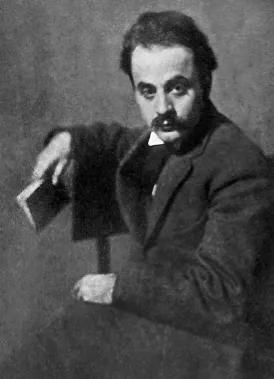
Kahlil Gibran R Black
Kahlil Gibran was a Lebanese-American writer, poet, and artist known for 'The Prophet,' blending Eastern and Western influences.
Kahlil Gibran, born Jubran Khalil Jubran in Lebanon in 1883, was a writer, poet, and visual artist who became a significant literary figure in the early 20th century. After immigrating to Boston in 1895, his artistic talents were recognized early on. He pursued studies in both his native land and Paris, developing a style that drew from diverse philosophical and spiritual traditions. Gibran's literary career began with Arabic publications, but he gained international acclaim with his English works, most notably 'The Prophet' (1923), which achieved massive global success and has been translated into numerous languages. His visual art was also exhibited in prominent galleries. Gibran passed away in 1931, leaving behind a body of work celebrated for its spiritual and mythological symbolism, influencing Arabic literature and art.
Early Life and Artistic Development
Born in Bsharri, Lebanon, Kahlil Gibran's early life was marked by his family's Maronite Christian faith and their struggles with poverty, exacerbated by his father's imprisonment and confiscation of property. He immigrated to Boston with his mother and siblings in 1895, where he was enrolled in school and his artistic potential was quickly identified. A pivotal connection was made with photographer and publisher F. Holland Day, who supported his creative pursuits. Gibran briefly returned to Lebanon for formal education, studying Arabic literature and graduating with honors before returning to Boston. His early artistic and literary endeavors, including exhibitions of his drawings and the publication of his first Arabic book, laid the groundwork for his future career.
Literary Career and Influences
Gibran's literary journey progressed from early Arabic publications to international renown in English. His time in Paris, supported by patroness Mary Haskell, exposed him to intellectual circles and influenced his writings, some of which, critical of established authorities, faced bans in the Ottoman Empire. He co-founded the Pen League with fellow poets, fostering a literary community. Gibran's most famous work, 'The Prophet,' published in 1923, became a global bestseller, cementing his legacy. His writings and art are often described as embodying a blend of influences, including elements of rebellion, pantheism, and mysticism, reflecting a profound engagement with spiritual and philosophical themes.
Artistic Vision and Legacy
Beyond his literary achievements, Gibran was a visual artist whose paintings were exhibited in notable galleries. His artwork frequently explored personal visions infused with spiritual and mythological symbolism. Art critics recognized a classical sensibility in his work, drawing comparisons to Renaissance masters. Gibran's extensive body of creative output is considered an artistic legacy for all nations. He bequeathed all future royalties from his books to his birthplace, Bsharri, where a museum now stands in his honor. His influence on Arabic poetry and literature in the first half of the 20th century is considered paramount, and he remains a celebrated literary hero.
Key Ideas
- Spiritual and mythological symbolism in art and writing
- Blending of Eastern and Western philosophical and mystical traditions
- Critique of secular and spiritual authority
- The Prophet as a seminal work exploring spiritual themes
Books by Kahlil Gibran R Black
0 free public domain books · Read online or download
