Juno Lucina
Diana, a Roman goddess of nature and the moon, was also revered as a triple deity associated with the underworld and childbirth.
Diana was a significant goddess in Roman religion, primarily associated with the wilderness, nature, hunters, wildlife, crossroads, the night, and the Moon. Her mythology was heavily influenced by the Greek goddess Artemis, with whom she was equated. Early in Roman history, she was recognized as a patroness of the countryside and hunters, but her domain later expanded to encompass the "tame" countryside and idealized rural life.
Beyond her association with nature, Diana was also venerated as a triple goddess, often identified with Luna (the Moon) and Hecate (the underworld). This tripartite aspect, known as Diana triformis, represented her roles as huntress, moon goddess, and goddess of the underworld. Her epithet "Trivia," derived from "trivium" (triple way), highlights her connection to crossroads, which symbolically linked to the underworld and transitions between life and death. Diana's association with childbirth, particularly under the name Juno Lucina, stemmed from her connection to the moon's cycles and her role as a helper in labor.
The Multifaceted Domain of Diana
Diana's divine portfolio was remarkably extensive, encompassing the wild untamed nature, the hunt, and wildlife, but also extending to the more cultivated countryside. Her patronage included hunters, the night, and crucially, the Moon. Early Roman worship focused on her identity as a huntress, a central figure in both Roman and Greek culture. Over time, influenced by Greek thought, she also came to represent the idealized "tame" countryside, embodying a dual role as protector of both wild and civilized lands. This complex persona was further enriched by her association with crossroads, symbolized by her epithet "Trivia," and the night, reflecting choices made in uncertainty or "darkness."
Diana as a Triple Goddess
A significant aspect of Diana's worship involved her conception as a triple deity, known as Diana triformis. This manifestation merged her identity with Luna, the Moon goddess, and Hecate, the goddess of the underworld. These were not seen as separate deities but rather as different facets of Diana herself: the huntress, the moon, and the underworld guardian. This concept was particularly venerated at her sacred grove in Nemi, where imagery and cultic practices reflected this threefold unity. The association with crossroads further reinforced this triple aspect, symbolizing passage and liminality, connecting the earthly realm with the celestial and infernal.
Connections to Childbirth and Lunar Cycles
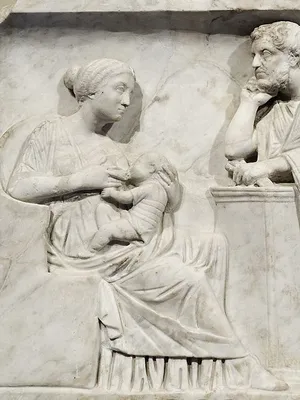
Diana's role as a goddess of childbirth, often invoked as Juno Lucina or Diana Lucina, is deeply intertwined with her lunar associations. The cycles of the moon were believed to parallel human fertility cycles, including menstruation and pregnancy. Consequently, Diana was invoked to aid women during labor and protect infants. Votive offerings found at her shrines, such as representations of babies and wombs, attest to this function. Her connection to the moon also linked her to the passage of time during pregnancy, with birth often occurring after a certain number of lunar revolutions. This role as a "helper" in childbirth underscores her practical influence on human life, despite her celestial and somewhat detached nature.
Etymological Roots and Celestial Significance
The name Diana is believed to derive from the Proto-Italic *dīwī, meaning "divine" or "heavenly," stemming from the Proto-Indo-European root *dyew-, associated with the "daylight sky." Ancient writers like Varro and Cicero linked her name to "dies" (day) and the moon's radiance, noting her title Diana Lucifera ("light-bearer"). This etymology highlights her celestial origins and her connection to light, both earthly and lunar. Her epithet Omnivaga ("wandering everywhere") also points to her planetary association, emphasizing her movement across the heavens and her transformative power, turning darkness into daylight. Her nature as a "frame god" suggests a transcendent heavenly power that, while detached from direct worldly rule, retains influence over succession and human preservation.
Key Ideas
- Triple Goddess (Diana, Luna, Hecate)
- Goddess of the Hunt and Wilderness
- Goddess of the Moon and Night
- Protector of Childbirth
- Goddess of Crossroads (Trivia)
- Frame God concept
Notable Quotes
“The name Dīāna probably derives from Latin dīus ('godly'), ultimately from Proto-Italic *dīwī, meaning 'divine, heavenly'.”
“The ancient Latin writers Varro and Cicero considered the etymology of Dīāna as allied to that of dies and connected to the shine of the Moon, noting that one of her titles is Diana Lucifera ("light-bearer").”
“people regard Diana and the moon as one and the same.”
“the moon (luna) is so called from the verb to shine (lucere). Lucina is identified with it, which is why in our country they invoke Juno Lucina in childbirth, just as the Greeks call on Diana the Light-bearer.”
“Diana also has the name Omnivaga ("wandering everywhere"), not because of her hunting but because she is numbered as one of the seven planets; her name Diana derives from the fact that she turns darkness into daylight (dies).”
Books by Juno Lucina
3 free public domain books · Read online or download