John George Woodroffe Arthur Avalon
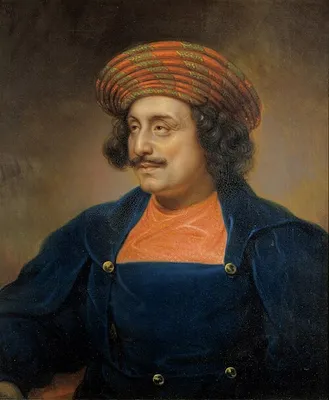
Raja Ram Mohan Roy was a pivotal Indian reformer and writer, instrumental in founding the Brahmo Sabha and advocating against social injustices.
Raja Ram Mohan Roy (1772–1833) was a prominent Indian social reformer and writer, recognized as a founder of the Brahmo Sabha, the precursor to the Brahmo Samaj. He was awarded the title of Raja by Mughal emperor Akbar II. Roy significantly influenced politics, public administration, education, and religion, notably campaigning against practices like sati and child marriage. His intellectual journey involved deep study of Sanskrit, Persian, and English, alongside Arabic, Latin, and Greek. He was torn between the path of a scholar and a public administrator, a tension reflected throughout his life. A pivotal experience was witnessing his sister-in-law's death by sati, which fueled his lifelong advocacy against this practice.
Roy's educational background is debated, but it's believed he studied in village pathshalas, a madrasa in Patna, and in Benares for advanced Sanskrit and Hindu scriptural studies. His work focused on reviving the ethical principles of the Vedanta philosophy, emphasizing the unity of God and promoting rational, ethical, and non-authoritarian views within Hinduism. He also sought to integrate Western culture with Indian traditions and established schools to promote modern education. His writings garnered interest from British and American Unitarians. He served the East India Company in various capacities, including as a clerk and later as a moneylender, and developed an interest in Greek and Latin. His theological statement, Tuhfat-ul-Muwahhidin, written in Persian, is considered an early theological work, though not deeply Vedantic at that stage.
Foundational Religious and Social Reforms
Raja Ram Mohan Roy dedicated much of his life to reforming Indian society and religious practices. He championed the revival of the pure, ethical principles found in the Upanishads, advocating for the monotheistic ideals of the Vedanta school. A significant part of his reformist agenda was the abolition of oppressive social customs, most notably sati, the practice of burning widows alive, and child marriage. He also campaigned against the caste system's rigidities and meaningless rituals. To propagate his ideas, he founded the Atmiya Sabha in 1814, a discussion circle aimed at promoting Vedanta's monotheistic tenets. Later, he co-founded the Brahmo Sabha in 1828, which evolved into the Brahmo Samaj, a movement that played a crucial role in modernizing Indian society.
Engagement with Western Thought and Education
Roy's intellectual curiosity extended to Western languages and philosophies, as evidenced by his study of English, Greek, and Latin. His interactions with figures like William Carey, a Baptist missionary, exposed him to Christian theology, sparking debates and theological exchanges. While some sources suggest a collaboration on the "Maha Nirvana Tantra" between 1796 and 1797, this is considered improbable by scholars. Roy's efforts to bridge Eastern and Western thought are also seen in his establishment of schools promoting a modern educational system in India. His writings and theological discussions, particularly his advocacy for Unitarian Christianity, generated interest among British and American Unitarians, highlighting his role as an intellectual bridge between cultures.
Economic Advocacy and Political Influence
Beyond religious and social reform, Raja Ram Mohan Roy was also an early critic of the economic policies of the East India Company. He was among the first to analyze and quantify the significant outflow of wealth from India to England. Roy estimated that roughly half of India's collected revenue was transferred to England, leaving insufficient resources for the nation's social well-being. He believed that allowing unrestricted European settlement and free trade in India could potentially alleviate this economic drain. His political influence was recognized when he was sent to England in 1830 as an envoy of the Mughal Emperor Akbar Shah II, who had bestowed upon him the title of Raja.
Key Ideas
- Revival of Vedanta philosophy's ethical principles
- Unity of God
- Abolition of Sati and child marriage
- Critique of caste system and idolatry
- Integration of Western and Indian cultural values
- Advocacy for modern education
- Critique of East India Company's economic policies
Books by John George Woodroffe Arthur Avalon
0 free public domain books · Read online or download
