Joan Rose Staffen
Kobolds are German household spirits, known for chores, pranks, and sometimes cruel retribution, often appeased with offerings.
Kobolds are figures from German folklore, generally understood as household spirits. They are known to perform domestic tasks, such as cleaning kitchens or tending to stables, and can also be mischievous pranksters. While generally helpful, kobolds can become vengeful if mistreated, with legends detailing acts of extreme cruelty. Offerings, particularly of milk and bread, were traditionally given to maintain their goodwill and ensure good behavior. The concept of the kobold is ancient, with roots potentially tracing back to hearth deities and household gods, evolving into localized tutelary spirits.
Subtypes and related figures include the Hütchen, known for its red cap, and Hinzelmann, a shapeshifter able to appear in various forms like animals or even inanimate objects. Other related beings include the Schrat (a wood and house sprite) and the Klabautermann, a spirit associated with ships. The etymology of the word 'kobold' is believed to derive from Old High German terms meaning 'chamber ruler' or 'house ruler,' reflecting their domestic domain. While often depicted as small children or having child-like forms, descriptions vary, with some noting red hair and beards, or long white beards in later interpretations.
Nature and Behavior
Kobolds are primarily recognized as household spirits within German folklore, capable of both helpful actions and mischievous or even cruel behavior. They might invisibly create noises, akin to a poltergeist, or assist with chores like kitchen work or stable maintenance. Their disposition often depends on how they are treated; a kobold might accept offerings of milk or bread as a reward for good conduct. However, mistreatment can provoke severe retaliation, with tales describing brutal retribution. The origins of these spirits are thought to be linked to ancient hearth-fire cults and household deities, evolving into localized guardians of the home.
Forms and Manifestations
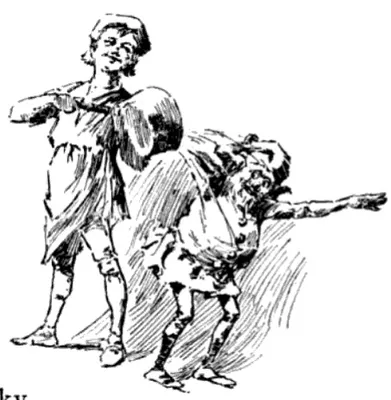
The physical appearance and manifestations of kobolds are varied. Some are described as small children, sometimes identifiable only by touch, or as the souls of unbaptized children. Others are depicted with red hair and beards, or, like the Klabautermann, with red hair and white beards. Pointy red caps are a common attribute, shared with similar sprites like the Norwegian nisse. Kobolds can also shapeshift, appearing as animals, feathers, or even fiery shafts. Some are associated with specific environments, such as the Klabautermann on ships or the Gütel in stables and haylofts.
Etymology and Classification
The term 'kobold' is widely accepted to originate from Old High German elements meaning 'chamber' or 'house' combined with 'ruler' or 'power,' signifying a 'household spirit.' This interpretation aligns with their role as domestic deities. Historically, the word has also been used generically for various house spirits. Some scholars have linked kobolds to ancient Roman household deities like the Lares and Penates, and to the Greek 'agathós daímōn.' In earlier contexts, the term 'kobold' might have referred to figurines made of wood or wax, and in some glossaries, it was associated with dream demons or incubi, suggesting a complex and evolving classification.
Key Ideas
- Household spirit in German folklore
- Performs chores and pranks
- Can be vengeful if mistreated
- Appeased with offerings like milk
- Shapeshifting abilities
- Associated with specific locations (home, stable, ship)
- Etymologically linked to 'house ruler'
Books by Joan Rose Staffen
2 free public domain books · Read online or download