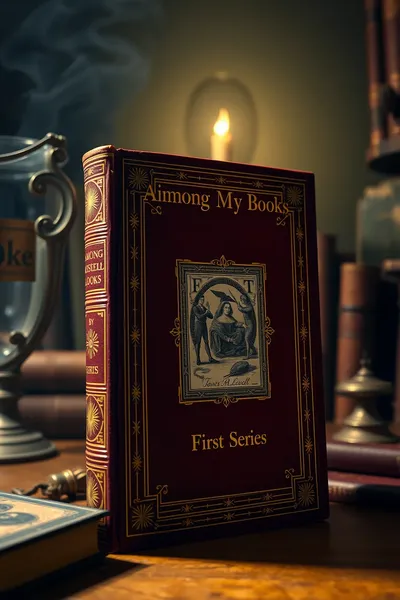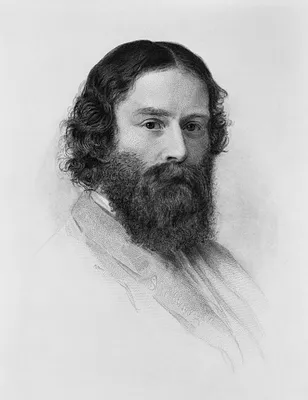
James Russell Lowell
James Russell Lowell was a Romantic poet, critic, and diplomat, known for his abolitionist writings and association with the Fireside Poets.
James Russell Lowell, born in 1819, was an American poet, critic, editor, and diplomat associated with the Fireside Poets, a group of New England writers celebrated for their accessible verse. Despite a reputation for troublemaking at Harvard, from which he graduated in 1838 and later earned a law degree, Lowell published his first poetry collection in 1841. His marriage to Maria White profoundly influenced him, leading him to become actively involved in the abolitionist movement, which he expressed through his writing. Lowell gained significant recognition for satirical works like "A Fable for Critics" (1848) and "The Biglow Papers" (1848). After Maria's death, he accepted a professorship at Harvard and later served as editor of The Atlantic Monthly. His career also included diplomatic posts as an ambassador to Spain and Great Britain. Lowell viewed the poet as a societal prophet and critic, using his work for reform, though his views on abolitionism and African Americans evolved over time. His use of dialect and satire inspired later writers like Mark Twain.
Early Life and Education
Born in Cambridge, Massachusetts, James Russell Lowell was the youngest of six children. His mother fostered an early appreciation for literature. He attended Harvard College, beginning in 1834, where he was known more as a troublemaker than a diligent student, often neglecting his studies. Despite this, he became an editor of the literary magazine Harvardiana and was elected class poet for his graduating year in 1838. However, he was suspended and unable to deliver his poem in person. During this period of exile from Harvard, he befriended Ralph Waldo Emerson and other Transcendentalists. After graduating, Lowell explored various professions before enrolling in Harvard Law School in 1840, though he also experienced periods of depression and suicidal thoughts.
Marriage and Abolitionist Influence
Lowell met Maria White in 1839, and they married in 1844. Their relationship was deeply influential for Lowell, with him crediting her for much of his early poetic work. Maria was actively involved in social reform movements, particularly abolitionism, and she encouraged Lowell to become more involved. His writing began to reflect his anti-slavery views, notably in his poetry collections. The couple moved to Philadelphia for a time, where Lowell worked as an editor for an abolitionist newspaper, the Pennsylvania Freeman. They returned to Cambridge and had four children, but tragically, only one survived infancy, a loss that deeply affected Lowell.
Literary and Editorial Career
Lowell's literary career included founding the journal The Pioneer with a friend, which, despite its high intellectual standards and inclusion of Edgar Allan Poe's work, ceased publication after only three issues, leaving Lowell in debt. He continued to contribute to various publications, including a series on "Anti-Slavery in the United States." He achieved significant fame in 1848 with the publication of "A Fable for Critics," a satirical work, and "The Biglow Papers," which utilized Yankee dialect and satire. Following Maria's death in 1853, Lowell took on a professorship of languages at Harvard in 1854. He later became the editor of The Atlantic Monthly in 1857 and taught at Harvard for two decades.
Later Life and Diplomatic Service
In addition to his literary and academic pursuits, Lowell entered public service. He received his first political appointment twenty years after becoming a Harvard professor, serving as the ambassador to Spain. He was later appointed ambassador to Great Britain. Lowell spent his final years in Cambridge, residing on the same estate where he was born, Elmwood. He passed away there in 1891. Throughout his career, Lowell believed in the poet's role as a social prophet and critic, advocating for reform, particularly through his engagement with abolitionism. His innovative use of dialect and satire influenced subsequent generations of American writers.
Key Ideas
- The poet as a prophet and critic of society
- Using poetry for social reform, particularly abolitionism
- Satirical commentary on contemporary critics and poets
- Emulation of the true Yankee accent in dialogue
Notable Quotes
“During Freshman year, I did nothing, during Sophomore year I did nothing, during Junior year I did nothing, and during Senior year I have thus far done nothing in the way of college studies.”
“I was as great an ass as ever brayed & thought it singing.”
“the very picture of a True Marriage”
“half of earth and more than half of Heaven”
“owes all its beauty to her”
Books by James Russell Lowell
2 free public domain books · Read online or download