Isshu Miura, Isshu Miura, Ruth Fuller Sasaki
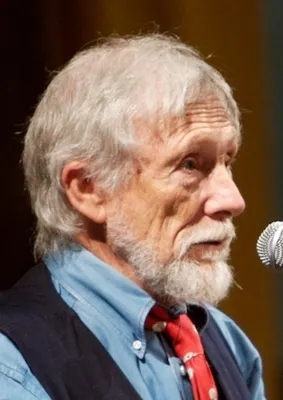
Gary Snyder is an American poet and essayist known for his environmental activism and immersion in Buddhist spirituality.
Gary Snyder, born in 1930, is an American poet, essayist, and environmental activist whose work is deeply influenced by Buddhist spirituality and nature. His early career was linked to the Beat Generation and the San Francisco Renaissance, earning him the description 'poet laureate of Deep Ecology.' Snyder's literary achievements include a Pulitzer Prize for Poetry and an American Book Award.
His life experiences, including a childhood accident that fostered a love of reading and early exposure to Native American cultures, shaped his perspective. Snyder pursued studies in anthropology and literature, graduating from Reed College, and later engaged in Zen Buddhist practices and scholarship, particularly in Japan. His work often reflects a profound connection to the natural world and an interest in East Asian traditions.
Early Influences and Education
Born in San Francisco, Gary Snyder's early life was marked by his family's move to Washington due to the Great Depression, where they lived a rural life. A significant turning point occurred at age seven when a serious accident led to a prolonged period of convalescence, during which he developed a voracious reading habit. This early immersion in books, combined with his awareness of the Coast Salish people and their relationship with nature, laid the groundwork for his future intellectual and artistic pursuits. He later attended Reed College, where he studied anthropology and literature, graduating with a dual degree. His senior thesis explored a Haida myth, demonstrating an early interest in indigenous cultures and their narratives.
Zen Buddhism and East Asian Studies
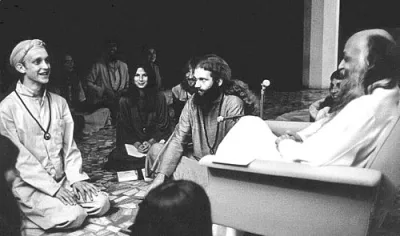
Snyder's engagement with Zen Buddhism became a central aspect of his life and work. After graduating, he briefly pursued graduate studies in anthropology but left to focus on poetry. His academic interests led him to study Asian culture and languages at the University of California, Berkeley, where he was exposed to ink wash painting and Tang dynasty poetry. He also encountered the writings of D. T. Suzuki, which influenced his decision to pursue Zen studies more seriously. Snyder spent significant time in Japan, studying Zen under various masters and engaging in translation work, particularly with Ruth Fuller Sasaki. He formally became a Buddhist in 1955 and later became a disciple of Rinzai Rōshi Oda Sesso.
Literary Career and Beat Association
Snyder's poetry gained recognition through its association with the Beat Generation. He met key figures like Allen Ginsberg and Jack Kerouac, with Kerouac drawing inspiration from Snyder for the character Japhy Ryder in "The Dharma Bums." Snyder's background in manual labor and his connection to nature set him apart from many urban-raised Beats, leading Lawrence Ferlinghetti to call him 'the Thoreau of the Beat Generation.' His first book, "Riprap," published in 1959, drew on his experiences as a forest lookout and trail builder. He was also a participant in the historic Six Gallery reading in 1955, where Ginsberg's "Howl" was first read publicly.
Environmentalism and Later Career
Beyond his literary contributions, Snyder has been a prominent environmental activist, often described as the 'poet laureate of Deep Ecology.' His immersion in Buddhist philosophy and his deep respect for nature are recurring themes in his essays and poetry. He has worked as an academic at the University of California, Davis, and served on the California Arts Council. His extensive translations from ancient Chinese and modern Japanese literature further highlight his engagement with East Asian thought and culture. Snyder's life and work represent a synthesis of Eastern spirituality, ecological consciousness, and poetic expression.
Key Ideas
- Deep Ecology
- Zen Buddhism
- Nature and environmentalism
- Integration of East Asian philosophy and Western thought
- The role of poetry in understanding the world
Notable Quotes
“So my folks brought me piles of books from the Seattle Public Library, and it was then I really learned to read and from that time on was voracious — I figure that accident changed my life. At the end of four months, I had read more than most kids do by the time they're 18. And I didn't stop.”
Books by Isshu Miura, Isshu Miura, Ruth Fuller Sasaki
2 free public domain books · Read online or download