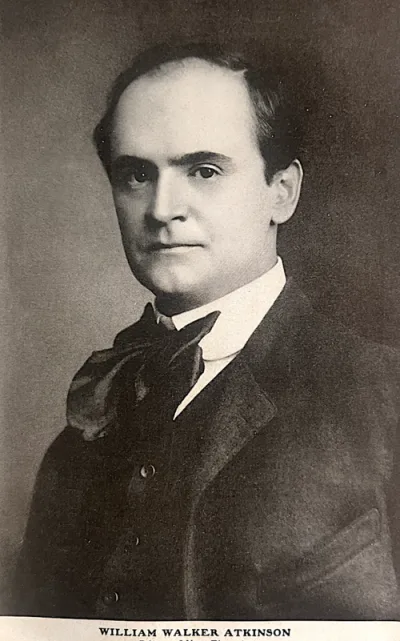
✍️ Author Biography
📚 3 free books
⭐ Known for: Dialogue Concerning the Two Chief World Sy...
The Index Librorum Prohibitorum, a list of banned books, was active until 1966 and had varying scopes of prohibition.
The Index Librorum Prohibitorum was a catalog of publications deemed heretical or contrary to Catholic doctrine, which the Church prohibited its followers from reading. This list was officially discontinued on June 14, 1966, by Pope Paul VI. The scope of prohibition varied, sometimes encompassing all works by an author, specific genres, or works on particular subjects. Initially, the prohibition of an author's 'opera omnia' (all works) often excluded writings not related to religion, but this nuance was removed in later editions, leading to a broader interpretation of the ban.
Throughout its history, the Index saw reversals, with some works and authors eventually being removed or never included. Notable examples include Galileo Galilei and Nicolaus Copernicus, whose works on heliocentrism were eventually permitted after periods of prohibition and censorship. Conversely, authors like Karl Marx and Charles Darwin, whose ideas were generally at odds with Church teachings, never appeared on the Index. The list included entries for numerous authors and their writings, with a comprehensive catalog available in later scholarly compilations.
Scope and Interpretation of Prohibitions
The Index Librorum Prohibitorum categorized banned materials with specific Latin phrases indicating the extent of the prohibition. Phrases like 'Omnia opera dramatica' (all dramatic works), 'Omnes fabulae amatoriae' (all novels or romances), and 'Opera omnia theologica' (all theological works) defined the scope for specific authors or genres. In some instances, an author's 'opera omnia' was banned, meaning all their works. However, the interpretation of 'opera omnia' evolved. Initially, it was often understood not to include works unrelated to religion or general moral rules. This distinction was removed in the 1929 edition, and by 1940, it was officially interpreted to mean all works by an author without exception, significantly broadening the impact of such prohibitions.
Reversals and Non-Inclusions
The history of the Index is marked by instances where prohibitions were lifted or never enacted. For example, the works of Nicolaus Copernicus and Galileo Galilei, initially banned for their heliocentric theories, were eventually permitted publication, with Galileo's scientific works authorized by Pope Benedict XIV. The general prohibition against heliocentrism was removed in 1758, and all official church opposition to the concept disappeared from the Index by 1835. Furthermore, many authors whose views might be considered contrary to Church doctrine, such as Karl Marx and Charles Darwin, were never placed on the Index. Similarly, prominent literary figures like James Joyce and D. H. Lawrence were not included, possibly because the primary criteria for banning were anticlericalism, blasphemy, and heresy.
Key Ideas
- Index Librorum Prohibitorum: A list maintained by the Catholic Church of books and publications deemed heretical, anti-clerical, or otherwise contrary to religious doctrine.
- Scope of Prohibition: Varying degrees of bans, from specific works to all writings by an author, with evolving interpretations.
- Reversal of Bans: The Index was not static, and prohibitions could be lifted over time, as seen with scientific works on heliocentrism.