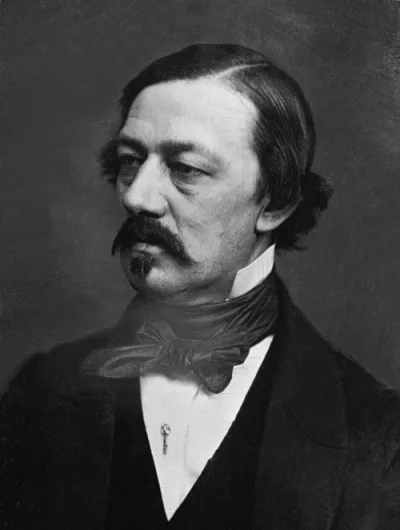
Henry William Herbert
Henry William Herbert was an English-born American writer, scholar, and sportsman known for his historical novels and sports writing.
Born in London in 1807, Henry William Herbert was a man of diverse talents, excelling as a classical scholar, historian, poet, illustrator, journalist, and writer on sport. Despite his aristocratic lineage, he emigrated to the United States in 1831 after financial ruin and spent eight years teaching classical languages. He founded the American Monthly Magazine but left due to disagreements. Herbert's writing, while sometimes criticized for being verbose or pompous, included numerous historical novels and translations of European works. He also gained significant recognition for his detailed writings on American field sports, published under the pseudonym Frank Forester.
Herbert's personal life was marked by loss; his first wife, Sarah Barker, died in 1844, followed shortly by their daughter Louisa. Their son William George was sent to England. He remarried Adela Budlong, but this union was brief. In 1858, feeling lonely and abandoned, Herbert died by suicide at the Stevens Hotel in New York City. His extensive literary output covered a wide range of subjects, from classical history to contemporary sporting practices.
Literary Contributions
Henry William Herbert was a prolific author whose work spanned multiple genres. He authored numerous historical novels, including "The Brothers: a Tale of the Fronde" (1834), "The Roman Traitor" (1846), and "Cromwell: An Historical Novel" (1838). His historical studies delved into figures and periods such as "The Captains of the Old World" (1851) and "Memoirs Of Henry The Eighth Of England" (1855). Herbert also translated classical works, notably "The Prometheus and Agamemnon of Aeschylus" (1849). His literary output was extensive, contributing significantly to American letters in the mid-19th century.
Sporting Authority and Pseudonym
Under the well-known pseudonym Frank Forester, Herbert became a leading authority on American sporting life. He contributed extensively to sporting magazines, most notably the 'Spirit of the Times.' His works on the subject provided detailed accounts of hunting, fishing, and horsemanship in the United States and British North America. Notable titles include "The Field Sports of the United States and British Provinces" (1849), "The Fish and Fishing of the United States" (1850), and "The Horse and Horsemanship in the United States and British Provinces of North America" (1858). These writings established him as a respected voice in the world of American sportsmanship.
Scholarly Acumen and Critical Reception
Herbert possessed considerable intellectual gifts, recognized for his profound knowledge of classical literature and English history. He was noted as having 'few equals in the United States' as a classical scholar. Despite these scholarly achievements and artistic talents, his perceived vanity and arrogance, stemming from his aristocratic background, did not always endear him to contemporaries. Literary critics sometimes found his novels to be 'prolix, lacking in imagination and humor,' with Edgar Allan Poe remarking on his tendency toward 'pompous grandiloquence' and being 'woefully turgid.'
Notable Quotes
“as a classical scholar he had few equals in the United States . . . his knowledge of English history and literature was extensive; he was a pen-and-ink artist of marked ability; as a sportsman he was unsurpassed; his pupils idolized him.”
“not unapt to fall into pompous grandiloquence”
“woefully turgid”
“prolix, lacking in imagination and humor.”
“had complained of feeling very lonely because his wife had left him”
Books by Henry William Herbert
3 free public domain books · Read online or download