Hamish Steele
Hugh Walpole was a prolific English novelist of the early 20th century, known for his vivid storytelling and engagement with literary circles.
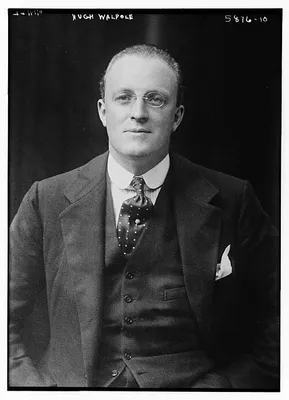
Hugh Seymour Walpole (1884–1941) was a successful English novelist whose career spanned the 1920s and 1930s. Born in New Zealand, he was the son of an Anglican clergyman and was initially steered toward a church career before embracing writing. Encouraged by prominent authors like Henry James and Arnold Bennett, Walpole developed a reputation for his engaging narratives and strong scene-setting. He wrote prolifically, often completing at least one book annually, and achieved significant popularity in the UK and North America. His works ranged from tragicomic stories and historical fiction to macabre tales and children's literature.
Walpole's personal life was marked by his struggle with his homosexuality at a time when it was illegal in Britain. He sought discreet relationships and the "perfect friend," eventually settling in the Lake District. He was also a generous patron to younger writers and a supporter of the arts, leaving a significant art collection to institutions like the Tate Gallery. Despite his considerable output, including thirty-six novels and numerous other works, his literary reputation has diminished since his death.
Early Life and Influential Mentors
Born in Auckland, New Zealand, Hugh Walpole's early life was shaped by his father's clerical career and his mother's restlessness, leading to his education in England. These formative years were often unhappy, marked by bullying and a sense of neglect, which he later attributed to his deep-seated desire for affection. He found solace in literature, devouring works by classic authors. His time in cathedral cities like Truro, Canterbury, and Durham later influenced his fictional settings. At Cambridge, he began publishing critical essays and navigated a personal crisis regarding his fading religious beliefs, with guidance from A. C. Benson. Walpole also grappled with his burgeoning homosexual feelings, which were initially directed towards Benson.
Literary Career and Personal Identity
Despite his father's hopes for him to enter the ministry, Walpole pursued a writing career, working as a book reviewer while writing fiction. He candidly acknowledged his homosexuality, a significant aspect of his life during a period when such acts were criminalized in Britain. This led him to seek discreet relationships and an idealized companion, a quest he termed the search for "the perfect friend." His early literary endeavors benefited from the mentorship of established authors like Henry James, with whom he developed a close, almost paternal relationship. Walpole's prolific output, including novels, short stories, plays, and memoirs, established him as a commercially successful author, with his work often praised for its vivid plots and settings.
Later Life and Legacy
During World War I, Walpole contributed to the war effort through service with the Red Cross on the Eastern Front and involvement in British propaganda efforts. In the 1920s and 1930s, he achieved widespread recognition, undertaking highly lucrative lecture tours in North America and continuing to publish numerous books annually. His literary output was extensive, encompassing genres from the macabre to historical fiction, notably the Herries Chronicle series set in the Lake District. He also engaged with filmmaking in Hollywood. In his later years, Walpole became a patron to emerging writers and a significant supporter of the visual arts, leaving a substantial art collection to institutions such as the Tate Gallery. His large body of work, though popular in its time, has since been largely overlooked.
Key Ideas
- The search for "the perfect friend" amidst discreet homosexual relationships.
- The influence of early life experiences and literary mentorship on a writing career.
- The tension between societal expectations and personal identity in early 20th-century Britain.
Notable Quotes
“The food was inadequate, the morality was 'twisted', and Terror – sheer, stark unblinking Terror – stared down every one of its passages ... The excessive desire to be loved that has always played so enormous a part in my life was bred largely, I think, from the neglect I suffered there”
“I grew up ... discontented, ugly, abnormally sensitive, and excessively conceited. No one liked me – not masters, boys, friends of the family, nor relations who came to stay; and I do not in the least wonder at it. I was untidy, uncleanly, excessively gauche. I believed that I was profoundly misunderstood, that people took my pale and pimpled countenance for the mirror of my soul, that I had marvellous things of interest in me that would one day be discovered.”
Books by Hamish Steele
2 free public domain books · Read online or download