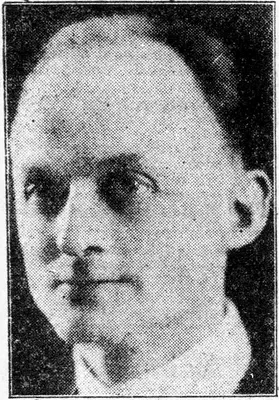
H Richard Niebuhr
Reinhold Niebuhr was a prominent theologian and ethicist known for Christian realism and influential public commentary.
Reinhold Niebuhr (1892–1971) was a significant American theologian and ethicist who became a leading public intellectual in the 20th century. He was a professor at Union Theological Seminary for over three decades and received the Presidential Medal of Freedom. Niebuhr's work frequently explored the connections between religion, politics, and public policy, with key books like "Moral Man and Immoral Society" and "The Nature and Destiny of Man." Initially a minister with socialist leanings and pacifist views, his thought evolved toward neo-orthodox theology and Christian realism in the 1930s. He critiqued utopianism and later supported American efforts against Soviet communism, becoming a major voice in public affairs during the 1940s and 1950s.
Niebuhr engaged in debates with both religious liberals and conservatives, challenging what he saw as naive optimism or narrow interpretations of faith. His contributions extended to political philosophy, advocating for political realism informed by theology, and significantly influenced international relations theory, encouraging a shift from idealism to realism. Numerous scholars, politicians, and activists, including Martin Luther King Jr. and figures like Hillary Clinton and Barack Obama, have cited his influence. Beyond his theological and political work, Niebuhr is also credited with composing the Serenity Prayer.
Early Life and Theological Development
Born in Missouri in 1892 to German immigrant parents, Reinhold Niebuhr's father was an Evangelical pastor. He grew up speaking German at home and followed his father and brother, H. Richard Niebuhr, into theology. After attending Elmhurst College and Eden Theological Seminary, he studied at Yale Divinity School, earning degrees in 1914 and 1915. Niebuhr often expressed regret for not pursuing a doctorate. He felt his time at Yale provided him with intellectual freedom, moving him beyond the confines of his German-American upbringing. His early ministry saw him embrace the Social Gospel, advocating for workers' rights and criticizing industrial conditions. This period also saw him develop a commitment to pacifism and socialism, though his theological perspective would later shift significantly.
Ministry in Detroit and Social Engagement
Niebuhr was ordained in 1915 and served as pastor of Bethel Evangelical Church in Detroit. During his tenure, the congregation grew substantially, reflecting his ability to connect with a diverse urban population drawn by the burgeoning automobile industry. Detroit at the time was experiencing significant social tensions, including the rise of the Ku Klux Klan. Niebuhr actively spoke out against the Klan, denouncing them as a harmful social phenomenon. His time in Detroit also coincided with America's entry into World War I. Despite his pacifist inclinations, Niebuhr stressed loyalty to America and sought to articulate a realistic ethical perspective on patriotism and pacifism, acknowledging the complexities of dealing with aggressive powers. He also served his denomination's War Welfare Commission during this period.
Critique of Industrialism and Rise of Christian Realism
Niebuhr's experiences in Detroit profoundly shaped his views on industrial labor. He became a vocal critic of figures like Henry Ford, highlighting the dehumanizing effects of factory work and the precarious employment faced by auto workers. His diary entries reveal a deep concern for the "drudgery and toil" of manual labor, which he saw as a necessary but unacknowledged cost of modern industrial efficiency. This critical stance led him to reject liberal optimism and contributed to his developing philosophical perspective. His critiques of capitalism resonated widely, contributing to his national prominence and marking a departure from earlier Social Gospel ideals towards a more critical, realistic assessment of societal structures and human nature.
Public Intellectual and Theological Influence
Throughout the mid-20th century, Niebuhr emerged as a major public intellectual, teaching at Union Theological Seminary for over 30 years. His theological evolution led him to neo-orthodox realism, a stance he termed "Christian realism." He argued against the perceived naivety of religious liberals regarding human nature and the Social Gospel, and also critiqued religious conservatives for their rigid interpretations of scripture. His advocacy for political realism, drawing on theological insights, significantly impacted political philosophy and international relations theory, moving scholars away from idealism. His influence extended to numerous prominent figures in politics and activism, as well as academic disciplines. He was also a founder of organizations like Americans for Democratic Action and the International Rescue Committee.
Key Ideas
- Christian realism: A theological and ethical framework emphasizing the complexities of human nature and the realities of power, often critical of utopianism and idealism.
- Critique of liberal optimism: Niebuhr challenged the belief in inevitable human progress and the inherent goodness of humanity, particularly as expressed in the Social Gospel.
- Political realism: Advocated for understanding and navigating political life based on a realistic assessment of power, self-interest, and human fallibility, informed by theological perspectives.
Notable Quotes
“We went through one of the big automobile factories to-day. ... The foundry interested me particularly. The heat was terrific. The men seemed weary. Here manual labour is a drudgery and toil is slavery. The men cannot possibly find any satisfaction in their work. They simply work to make a living. Their sweat and their dull pain are part of the price paid for the fine cars we all run. And most of us run the cars without knowing what price is being paid for them. ... We are all responsible. We all want the things which the factory produces and none of us is sensitive enough to care how much in human values the efficiency of the modern factory costs.”
Books by H Richard Niebuhr
0 free public domain books · Read online or download
