Hélène Cixous
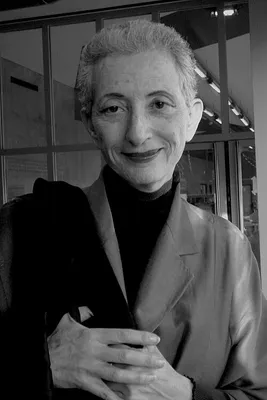
Hélène Cixous is a French writer, critic, and academic known for her experimental style and influential feminist theory.
Hélène Cixous, born in 1937, is a prolific French writer, playwright, and literary critic whose academic career has been significantly linked to the University of Paris VIII, which she helped establish. She is recognized for her experimental and versatile approach to writing and thought, contributing across numerous genres including theatre, literary and feminist theory, art criticism, autobiography, and poetic fiction. Cixous's early novel "Dedans" (Inside) garnered attention in 1969, winning the Prix Médicis and exploring themes of identity and memory. Her 1976 article "The Laugh of the Medusa" positioned her as a key figure in early post-structural feminist thought. She has engaged in collaborations with various artists and directors and is considered a notable literary figure.
Academic and Intellectual Foundations
Cixous's academic journey included earning her agrégation in English in 1959 and a Doctorat ès lettres in 1968, with a focus on English literature and James Joyce. Her involvement in founding the University of Paris VIII in 1968 was pivotal, leading to the establishment of Europe's first university center for women's studies in 1974. Her intellectual work, often considered deconstructive, engages deeply with philosophical concepts. She co-developed the term "phallogocentrism" with Luce Irigaray, building on the ideas of Jacques Derrida and Jacques Lacan to analyze language and power structures, particularly how the phallic is privileged and women are defined by absence. Her work is also influenced by psychoanalytic theory, notably Sigmund Freud, though she critically engaged with his theories on gender development.
Literary Contributions and Style
With over seventy published works, Cixous's output spans a wide range of genres, including poetry, essays, plays, and fiction. Her writing is characterized by an experimental style and a deep exploration of themes such as identity, memory, death, and the interplay between sexuality and language. Her seminal essay "The Laugh of the Medusa" (1975) introduced the concept of "écriture féminine," a distinct mode of writing by and for women. Cixous has also written extensively on other writers and artists, including Jacques Derrida, Clarice Lispector, Maurice Blanchot, and Franz Kafka, often exploring nuanced interpretations and layered meanings within their work.
Key Theoretical Concepts
A central tenet of Cixous's thought is the concept of "écriture féminine," or feminine writing, which she proposed as a way for women to reclaim language and express their experiences outside patriarchal structures. This concept is intertwined with her critique of "phallogocentrism," a term she coined with Luce Irigaray, which describes the privileging of masculine perspectives and linguistic structures in Western thought and language. Cixous's work often delves into the complexities of identity, exile, and the relationship between the body and language, drawing from her personal experiences and philosophical inquiries.
Key Ideas
- Écriture féminine (feminine writing)
- Phallogocentrism
- The relationship between sexuality and language
- Critique of patriarchal linguistic structures
Notable Quotes
“Helene's texts are translated across the world, but they remain untranslatable. We are two French writers who cultivate a strange relationship, or a strangely familiar relationship with the French language – at once more translated and more untranslatable than many a French author. We are more rooted in the French language than those with ancestral roots in this culture and this land.”
Books by Hélène Cixous
0 free public domain books · Read online or download