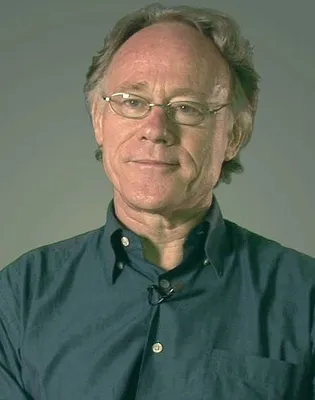
Graham Hancock Robert Bauval
Graham Hancock and Robert Bauval explore ancient civilizations, lost knowledge, and esoteric connections in their controversial works.
Graham Hancock, a British author born in 1950, shifted from journalism and social commentary to speculative theories about ancient history and civilizations. His work, often co-authored with Robert Bauval, proposes that an advanced society existed during the last Ice Age, predating known civilizations. Hancock suggests survivors of a cataclysm, possibly comet impacts around 12,900 years ago, shared their knowledge, influencing early cultures in regions like Egypt, Sumer, and Mesoamerica. This theory posits that ancient monuments and myths hold clues to this lost epoch and its advanced spiritual or technological understanding.
Scholarly critiques often label Hancock's research as pseudoarchaeology and pseudohistory, citing a lack of accuracy, impartiality, and a tendency to ignore contradictory evidence while cherry-picking supporting details. His ideas are sometimes linked to hyperdiffusionism and concepts of secret knowledge. Hancock himself presents his work as a challenge to academic dogma and a path to understanding spiritual elements dismissed by materialism. Bauval, a co-author, has focused on astronomical alignments in ancient structures, particularly the Giza pyramids, linking them to celestial events in remote prehistory, as seen in works like 'The Message of the Sphinx.'
Lost Civilizations and Ice Age Knowledge
Graham Hancock's central thesis posits the existence of a highly advanced global civilization that flourished during the last Ice Age, before its destruction by a cataclysmic event, likely comet impacts, around 12,900 years ago. He argues that remnants of this civilization survived and transmitted their sophisticated knowledge, including spiritual and potentially technological insights, to the nascent hunter-gatherer societies that emerged afterward. This transmission is seen as the catalyst for the development of early complex cultures in places like ancient Egypt, Sumer, and Mesoamerica. Hancock interprets ancient myths, megalithic sites, and symbols across the globe as fragmented evidence of this lost epoch and its advanced inhabitants, suggesting a common source of ancient wisdom.
Esoteric Interpretations and Ancient Alignments
Robert Bauval, often collaborating with Hancock, has focused on the astronomical significance of ancient sites, particularly the Giza pyramid complex. In works like 'The Message of the Sphinx,' Bauval and Hancock propose that the pyramids and the Sphinx were constructed as early as 10,500 BC, aligning with the stars of Orion's Belt and celestial patterns from that era. They suggest this alignment represents a sophisticated record of a specific point in time, referred to as 'Zep Tepi' or the 'First Time' in Egyptian lore. This interpretation implies that ancient Egyptians possessed advanced astronomical knowledge and intended to encode messages within their monumental architecture, potentially linking to hidden records or a lost civilization's legacy.
Critiques and Alternative Perspectives
Hancock's theories have faced significant criticism from mainstream academia, with scholars often categorizing his work as pseudoarchaeology and pseudohistory. Critics argue that his methodology involves misrepresenting sources, ignoring context, and selectively presenting evidence to fit predetermined conclusions, rather than rigorous historical or archaeological analysis. His ideas about an advanced Ice Age civilization are seen as a modern iteration of older diffusionist theories. Hancock, however, frames his work as a challenge to academic dogmatism and a quest for deeper spiritual understanding, suggesting that materialist science overlooks crucial aspects of reality and ancient wisdom. He has not pursued scholarly peer review for his non-fiction work.
Key Ideas
- An advanced global civilization existed during the last Ice Age.
- This civilization was destroyed by a cataclysm around 12,900 years ago.
- Survivors transmitted knowledge to early cultures, sparking civilization.
- Ancient monuments and myths are evidence of this lost epoch.
- Astronomical alignments in ancient sites encode historical or symbolic messages.
- Ancient peoples possessed spiritual and possibly advanced technological knowledge.
Notable Quotes
“a whacking big dose of amateur scholarship alloyed with a fervid imagination.”
“that the Lost Ark of the Covenant really exists”
“that the creation of the Sphinx and Pyramids occurred as far back as 10,500 BC using astronomical data.”
“a warning that a Mars-like doom lies in wait for the Earth unless we take steps to avert it.”
“the stream of heterodox religious beliefs, from early Christianity to the 18th century.”
Books by Graham Hancock Robert Bauval
0 free public domain books · Read online or download
