Gilbert Childs Sylvia Childs
Lydia Maria Child was a pioneering American abolitionist, feminist, and writer known for her influential novels and activism.
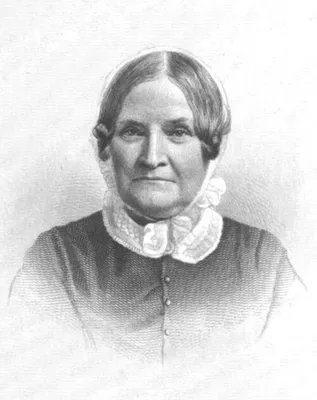
Lydia Maria Child, born Lydia Maria Francis in 1802, was a multifaceted American writer and activist. Her career spanned novels, domestic manuals, and extensive journalism, reaching a broad audience from the 1820s to the 1850s. She courageously addressed controversial topics like male dominance and white supremacy, often challenging societal norms and facing backlash. Child's early life in Medford, Massachusetts, included a solid education, influenced by her minister brother, Convers Francis. She began her writing career in her early twenties after being inspired by a literary journal, quickly producing her first novel, Hobomok.
Child's literary output was prolific, including novels, poetry, and practical guides such as "The Frugal Housewife." Her commitment to abolitionism became a central theme, particularly after reading "The Liberator." She advocated for the immediate emancipation of enslaved people and championed women's rights, believing that progress for women was intrinsically linked to the abolition of slavery. This dual focus led to significant controversy and even divisions within social movements, but solidified her position as a prominent voice for social justice.
Literary and Social Activism
Lydia Maria Child's literary career began with the publication of her novel "Hobomok" in the 1820s, quickly followed by other novels, poetry, and instructional books for women like "The Frugal Housewife." Her writing was widely read, and she used her platform to address pressing social issues. Central to her activism was her fervent opposition to slavery. In 1833, she published "An Appeal in Favor of that Class of Americans Called Africans," a groundbreaking work that argued for the immediate emancipation of enslaved people and challenged the notion of racial inferiority. This book was the first anti-slavery work published in book form in America and garnered significant attention, despite leading to social ostracism for Child. She became a prominent figure in the abolitionist movement, helping to organize anti-slavery fairs and serving as editor of the "National Anti-Slavery Standard," where she was the first woman to edit a national political paper.
Feminism and Native American Rights
Beyond her anti-slavery work, Lydia Maria Child was a dedicated advocate for women's rights. She viewed the subjugation of women by men as analogous to the enslavement of Black people, believing that true progress for women could only be achieved after the abolition of slavery. She advocated for women's equal participation in social movements, which sometimes led to internal conflicts. While she initially favored collaboration with men, later experiences, particularly her refusal to endorse violence in the anti-slavery struggle, led her to withdraw from organized women's rights societies. In her later years, Child also became a significant voice for Native American rights, publishing works that addressed their mistreatment and advocated for their fair treatment. Her writings consistently challenged prevailing prejudices and advocated for the humanity and equality of marginalized groups.
Literary Legacy and Personal Life
Lydia Maria Child's most enduring legacy may be her poem "Over the River and Through the Wood," which became a beloved song. Her domestic manuals, particularly "The Frugal Housewife," were immensely popular and practical, offering advice on economy and household management to a wide audience. Throughout her life, Child maintained a commitment to her principles, even when it meant facing public disapproval. She and her husband, David Lee Child, provided refuge for escaped slaves and continued their activism until their deaths. Her ability to weave social commentary into accessible fiction and practical guides allowed her to reach a broad readership and leave a lasting impact on American social and literary history.
Key Ideas
- Abolition of slavery
- Women's rights and equality
- Native American rights
- Critique of white supremacy
- Opposition to American expansionism
- Practical advice on domestic economy
Books by Gilbert Childs Sylvia Childs
0 free public domain books · Read online or download
