✍️ Author Biography
George F. Dillon
📅 1839 – 1913
🌍 Irish
📚 0 free books
⭐ Known for: Ireland: what she has done for religion an...
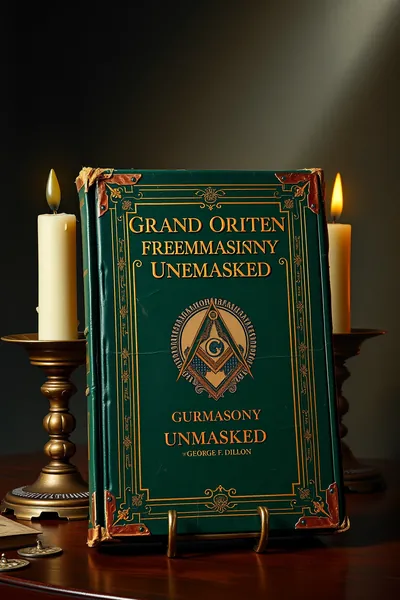
George F. Dillon was an Irish Catholic missionary and writer known for his 1884 lectures on a supposed Masonic war against Christianity.
George Francis Dillon, born in Ireland in 1836, was a Catholic priest and writer who served as a missionary in Australia. Educated at All Hallows College in Dublin, he departed for Australia in 1861 to minister to Aboriginal people, establishing a mission in Burragorang. During his time in New South Wales, he held various parish roles and was commissioned by Pope Pius IX to conduct a special investigation, earning him the title "Missionary Apostolic." He also held a Doctor of Divinity degree, qualifying him to teach theology.
Dillon later became involved in journalism, co-editing "The Express" in Australia. He relocated to Rome in 1882 due to health issues. In 1884, he gained public attention for delivering lectures in Edinburgh, asserting the existence of a Masonic conflict targeting Christian civilization. These lectures formed the basis of his most recognized book, "War of Anti-Christ with the Church and Christian Civilization." Pope Leo XIII endorsed this work and supported its translation into Italian. Dillon passed away in Rome on January 29, 1893. His writings also touched upon religious themes and Irish history.
Missionary Work and Education
George Francis Dillon began his ecclesiastical journey with education at All Hallows College in Dublin. In 1861, he embarked on a missionary career in Australia, dedicating himself to serving the Aboriginal population and founding a mission at Burragorang, near Sydney. His pastoral duties extended across several parishes in New South Wales, including roles in Armidale and Balmain. During his tenure in Balmain, Pope Pius IX appointed him for a special investigation, granting him the distinguished title of "Missionary Apostolic." Dillon's academic qualifications included a Doctor of Divinity, which permitted him to instruct in Christian theology at higher educational institutions.
Journalism and Public Acclaim
In 1877, Dillon's path intersected with the Australian Catholic press when he became involved with "The Express," a newspaper later acquired by Archbishop Roger Vaughan. Dillon served as co-editor alongside Vaughan for a period before moving to Rome in 1882 due to declining health. His public profile significantly rose in 1884 following his delivered conferences in Edinburgh. In these addresses, he articulated his belief in an ongoing conflict, which he characterized as a Masonic war aimed at undermining Christian civilization. These influential speeches were subsequently compiled and published in his notable book.
Later Life and Esoteric Interests
Following his lectures, Pope Leo XIII recognized Dillon's contributions by bestowing upon him the titles of "Monsignor" and "Cameriere Segreto," integrating him into the "Famiglia Pontificia." In his final years in Rome, he was supported by the Passionist Fathers. Dillon's later writings and public statements expressed strong critiques of various secretive societies and alleged political collaborations, including those involving the Bavarian Illuminati, Freemasons, Lord Palmerston, and the Carbonari. He also commented on the Alta Vendita document and Napoleon Bonaparte's purported connections to Freemasonry. His literary output generally focused on religious subjects, Irish history, and monasticism.
Key Ideas
- Alleged Masonic war against Christian civilization
- Critique of secretive societies and their political influence