Froissart, Jean
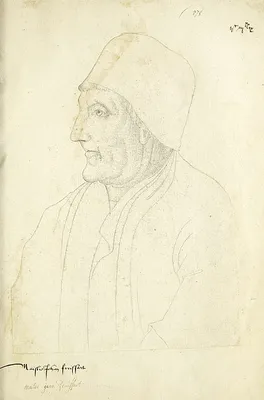
Jean Froissart was a medieval historian and poet whose Chronicles are a key source for 14th-century European history.
Jean Froissart, a French-speaking writer from the Low Countries, lived approximately between 1337 and 1405. He is known for his extensive writings, including the significant "Chronicles," a long Arthurian romance titled "Meliador," and a substantial collection of poetry. His "Chronicles" are particularly valued for their detailed account of the first half of the Hundred Years' War and are considered a primary representation of the chivalric culture of England, France, and Scotland during the 14th century.
Information about Froissart's life is primarily derived from his own writings and archival records indicating his service to various aristocrats. While his poems were once used to reconstruct his biography, modern scholarship suggests this approach is unreliable, as the "I" persona in his poetry is not necessarily autobiographical. He originated from Valenciennes and, by his mid-twenties, entered the service of Philippa of Hainault, queen consort to Edward III of England. This period, often interpreted as holding an official court position, is now understood by some scholars as more of a literary patronage, where he dedicated poems and received gifts.
Froissart was dedicated to his craft, undertaking extensive travels across Europe to gather firsthand accounts for his "Chronicles." He was present at significant events, including the wedding of Lionel, Duke of Clarence, in Milan, where he met fellow writers Chaucer and Petrarch. After Queen Philippa's death, he continued to receive patronage from other nobles, which funded further travels and research. He later expressed disappointment with the perceived decline of chivalry during a visit to England in 1395. The exact details of his death remain unknown, though he may be buried in Hainaut.
The Chronicles and Historical Significance
Froissart's "Chronicles" stand as his most enduring work, preserved in over a hundred illustrated manuscripts. These manuscripts, often richly decorated by prominent artists, underscore the importance of the "Chronicles" in medieval Europe. The work itself provides an invaluable historical record, particularly for the initial phase of the Hundred Years' War, detailing conflicts and courtly life. It is widely regarded as the foremost expression of the chivalric revival that characterized the kingdoms of England, France, and Scotland in the 14th century. Froissart's commitment to his historical endeavors was profound, evidenced by his extensive travels throughout England, Scotland, Wales, France, Flanders, and Spain to collect eyewitness accounts and firsthand information.
Literary Career and Patronage
Beyond his "Chronicles," Jean Froissart was a prolific poet and author, with "Meliador," a lengthy Arthurian romance, and a significant body of shorter lyrical poems to his name. His early life and career are pieced together from his writings and historical records. He began his service around 1361-1362 with Philippa of Hainault, Queen of England. While this role has been depicted as that of a court poet or official historian, some research suggests it was more a position of literary patronage, involving the dedication of poems and receiving occasional remuneration. Following the Queen's death, Froissart benefited from the support of other notable figures, such as Joanna, Duchess of Brabant, whose patronage helped finance his continued travels and research for his historical works.
Legacy and Later Life
Froissart's "Chronicles" have cemented his place in history, with numerous illuminated manuscripts attesting to their significance. One particularly opulent copy was commissioned in the 1470s by Louis de Gruuthuse, a Flemish nobleman, featuring miniatures by renowned artists. This emphasis on visual illustration highlights the cultural impact of his work. Froissart is also noted for a brief mention of the verge escapement mechanism in clockwork around 1368, a detail that predates other known references. His "Chronicles" later inspired the composer Edward Elgar to create an overture. Froissart's later years were marked by travel, including a return to England in 1395, where he reportedly felt disillusioned by what he perceived as the decline of chivalry. The specific date and circumstances of his death remain unconfirmed, though his remains may rest in Chimay, Hainaut.
Books by Froissart, Jean
2 free public domain books · Read online or download