Deborah Durbin
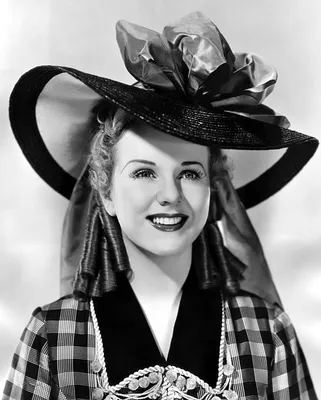
Deanna Durbin was a Canadian-American soprano and actress who saved Universal Pictures and later withdrew from public life.
Edna Mae Durbin, professionally known as Deanna Durbin, was a Canadian-American singer and actress celebrated for her roles in musical films during the 1930s and 1940s. Born in Canada, her family relocated to the United States where she became a citizen. Durbin began her career as a child actress and quickly rose to fame with Universal Pictures, with films like "Three Smart Girls" credited with saving the studio from financial ruin. She received a Juvenile Academy Award in 1938.
As she matured, Durbin sought more complex, non-musical roles, but these attempts were less commercially successful. After her retirement from films in 1949 and subsequent marriage to producer Charles Henri David, she moved to France and largely withdrew from public life, granting only one interview in 1983. Her musical performances often encompassed opera arias, art songs, and semi-classical pieces, a style now recognized as classical crossover.
Early Career and Rise to Stardom
Deanna Durbin's talent was recognized early, leading to voice lessons and showcasing her abilities. Her professional journey began when Metro-Goldwyn-Mayer sought a young actress for a film about opera singer Ernestine Schumann-Heink. Durbin's audition impressed the studio, and she was signed to a contract. Her debut film appearance was in the short "Every Sunday" alongside Judy Garland. Subsequently, Universal Pictures cast her in her first feature film, "Three Smart Girls" (1936), which became a significant success. This marked the beginning of a string of popular musical films produced by Joe Pasternak, including "One Hundred Men and a Girl" (1937). Durbin's performances were instrumental in revitalizing Universal Pictures, earning her the Juvenile Academy Award in 1938.
Artistic Evolution and Transition
As Durbin's career progressed, she expressed a desire to move beyond the idealized young daughter roles that had defined her early success. She aimed to explore more sophisticated, dramatic parts, taking on roles in films like the noir "Christmas Holiday" (1944) and the mystery "Lady on a Train" (1945). These films, however, did not achieve the same level of popularity as her earlier musicals. Despite her efforts to diversify her acting portfolio, she continued to be cast in musical roles. Durbin was also a significant shareholder in Universal Pictures, which afforded her considerable influence over her career choices, including approval of directors, stories, and songs.
Retirement and Public Withdrawal
Following her divorce from her second husband, Felix Jackson, in 1949, Deanna Durbin married producer-director Charles Henri David. The couple relocated to a farmhouse near Paris, where Durbin chose to step away from the public eye. She maintained a private life, dedicating herself to her family and personal pursuits. Her withdrawal from Hollywood was notable, and she granted only a single interview in 1983 to discuss her career. This decision marked a complete departure from her earlier life as a prominent film star and singer.
Key Ideas
- Classical crossover singing style
- Saving a major film studio from bankruptcy through popular appeal
Books by Deborah Durbin
2 free public domain books · Read online or download