David M. Wexelman
The afterlife is a concept of existence beyond physical death, explored through religion, esotericism, and metaphysics, with diverse beliefs in spiritual realms, reincarnation, or specific destinations.
The concept of the afterlife explores the continuation of consciousness or identity after the death of the physical body. Belief systems differ on what survives, ranging from partial elements to the entire soul or spirit, retaining personal identity. Some traditions posit existence in a spiritual realm, while others propose rebirth into this world through reincarnation, potentially continuing until spiritual liberation. Major influences on afterlife beliefs include religion, esotericism, and metaphysics.
Beliefs about the afterlife are varied. Some religions, including many pagan traditions, designate specific places like paradise or the underworld based on divine judgment of one's life actions. In contrast, reincarnation-centric systems, like those found in Indian religions, determine the nature of continued existence directly by an individual's conduct during their past life. Metaphysical models encompass theist immortalism, believing in an afterlife, and non-theistic approaches that also accept continued existence without reference to a deity. Both soul-based afterlife destinations and reincarnation are prevalent across various religious and philosophical systems.
Reincarnation and Cyclic Existence
Reincarnation, also known as rebirth or transmigration, is the notion that a part of a living being begins a new life in a different physical form after death. This concept is central to the doctrine of Saṃsāra, representing a cycle of existence. In Hinduism, this process involves souls (jivas) progressing through human and animal forms, learning and purifying themselves until liberation. Major Indian religions like Buddhism, Hinduism, Jainism, and Sikhism offer unique interpretations of reincarnation. This belief is not exclusive to Eastern traditions, appearing in ancient Greek figures such as Pythagoras and Plato, and various modern groups like Spiritism and theosophy. Even within Abrahamic religions, certain esoteric traditions such as Kabbalah and Rosicrucianism incorporate ideas of reincarnation or related concepts like a life review before entering afterlife planes.
Heaven, Hell, and Otherworldly Realms
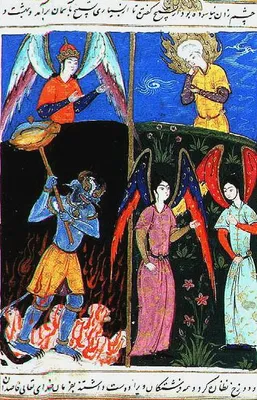
Heaven, often described as a higher, holy place or paradise, is a common concept in religious and cosmological beliefs, serving as the origin or dwelling place for divine beings and venerated ancestors. Accessibility varies, often dependent on virtue, faith, or divine will. Conversely, hell is frequently depicted as a place or state of punishment for souls after death. In linear historical religious views, hell may be eternal, while cyclic systems often see it as an intermediate stage between incarnations. Otherworld refers to any realm of existence, including heaven, hell, or other states, that lies outside the tangible world. In Hinduism, for instance, souls may go to various positive or negative regions (Svarga loka) after death, with their ultimate rebirth determined by karma until Moksha or Nirvana is achieved.
Ancient Conceptions of the Afterlife
Ancient Egyptian religion placed significant emphasis on the afterlife, viewing death as a temporary interruption. Key components of the soul, the ka and ba, were believed to journey to the 'Kingdom of the Dead.' The ka required sustenance through offerings, and the ba represented personality. Achieving a favorable afterlife, such as the Fields of Aaru, required a sin-free heart and knowledge of funerary texts like the Book of the Dead, tested in the Hall of Two Truths. Mummification and proper burial were considered essential for eternal life. In Ancient Greek and Roman traditions, figures like Hades ruled the underworld, where souls were transported by Hermes and ferried across the River Styx by Charon. Souls were then judged and sent to regions like Elysium (for the virtuous) or Tartarus.
Key Ideas
- Afterlife: Continuation of consciousness or identity after physical death.
- Spiritual Realm: A non-physical existence for the soul or spirit.
- Reincarnation: The rebirth of a soul or aspect of a being into a new physical form.
- Saṃsāra: The cycle of birth, death, and rebirth.
- Karma: The principle that actions in life determine future existence.
- Moksha/Nirvana: Liberation from the cycle of rebirth.
- Heaven: A place of divine reward or origin.
- Hell: A place of punishment or an abode for the dead.
- Ka and Ba: Egyptian concepts of soul components related to afterlife existence.
- Book of the Dead: Ancient Egyptian funerary text guiding the deceased.
Books by David M. Wexelman
0 free public domain books · Read online or download