David Lynch was a visionary filmmaker, artist, and musician known for his surrealist style and explorations of the subconscious.
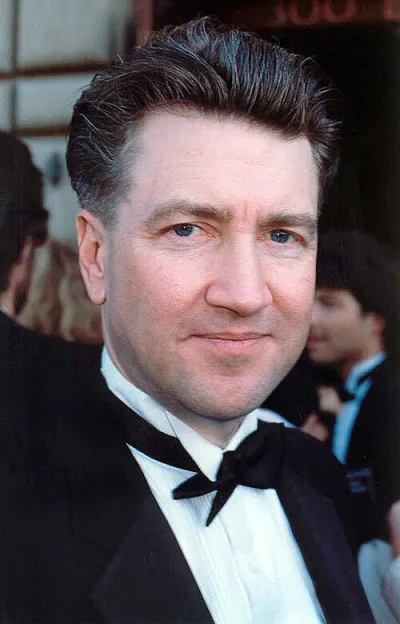
David Lynch (1946-2025) was a highly influential American filmmaker, producer, actor, painter, and musician, celebrated for his unique surrealist aesthetic, which coined the term "Lynchian." His career, spanning over five decades, garnered significant awards and nominations, including an Honorary Academy Award and a Palme d'Or. Lynch initially pursued painting before transitioning to filmmaking, driven by a desire to animate his artwork. His debut feature, the experimental "Eraserhead" (1977), gained cult status. He later achieved critical acclaim for films like "The Elephant Man" (1980), "Blue Velvet" (1986), and "Mulholland Drive" (2001), all earning him Best Director Oscar nominations. He also directed the Palme d'Or-winning "Wild at Heart" (1990) and the acclaimed television series "Twin Peaks" (1990-1991, 2017), considered a television landmark. Beyond film and television, Lynch engaged in music, acting, and various artistic endeavors, including furniture design and photography. A dedicated practitioner of Transcendental Meditation, he founded the David Lynch Foundation to promote meditation for at-risk individuals.
Artistic Origins and Early Influences
David Lynch's artistic journey began with a deep interest in painting. He initially studied art at the Corcoran School of the Arts and Design and later at the School of the Museum of Fine Arts in Boston, though he found these institutions uninspiring. A pivotal moment occurred when he received Robert Henri's "The Art Spirit," which solidified his commitment to an artistic path. His early life, marked by frequent family moves, instilled in him a sense of adaptability. Lynch's formative experiences in Philadelphia, a city characterized by its industrial grit, crime, and intense atmosphere, profoundly shaped his visual sensibility, providing vivid imagery that would later permeate his work. This environment, despite its inherent dangers, became a significant influence on his artistic output.
Transition to Filmmaking and Surrealist Vision
Lynch's foray into filmmaking stemmed from a desire to bring movement to his static paintings. His first short film, "Six Men Getting Sick" (1967), was an experimental piece born from this ambition. He continued to explore the medium with shorts like "The Alphabet" (1968), which already hinted at his distinctive surrealist style. His feature film debut, "Eraserhead" (1977), a body horror film, took five years to complete due to financial challenges and gradually found an audience as a midnight movie. This early work established his signature blend of unsettling atmosphere, dreamlike logic, and exploration of the darker aspects of the human psyche, laying the groundwork for his future cinematic explorations.
The "Lynchian" Aesthetic and Thematic Depth
The term "Lynchian" emerged to describe the unique surrealist sensibility that defines David Lynch's films. His work consistently delves into the subconscious, exploring themes of duality, hidden realities, and the unsettling nature of the ordinary. Films like "Blue Velvet" (1986) and "Mulholland Drive" (2001) exemplify this, peeling back the veneer of suburban normalcy to reveal underlying darkness and mystery. Lynch's narratives often eschew conventional storytelling, favoring dream logic and evocative imagery to create immersive, often disturbing, psychological landscapes. His consistent use of recurring motifs, unsettling sound design, and ambiguous characters invites viewers into a world that is both familiar and profoundly alien, prompting contemplation on the nature of perception and reality.
Multidisciplinary Artistic Practice and Spiritual Exploration
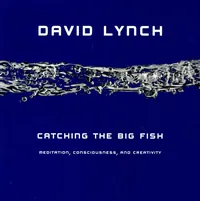
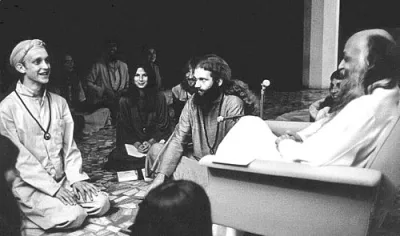
Beyond his celebrated filmmaking career, David Lynch has engaged in a wide array of artistic disciplines. He has worked as a musician, releasing albums and composing scores, and has also pursued acting roles, notably as Gordon Cole in "Twin Peaks." His creative output extends to animation, writing, cartooning, furniture design, photography, and sculpture, showcasing a restless and multifaceted artistic spirit. A significant aspect of Lynch's life is his long-standing practice of Transcendental Meditation. This spiritual discipline led him to establish the David Lynch Foundation, dedicated to providing meditation instruction to populations facing significant stress and adversity, underscoring his belief in the transformative power of inner peace and mindfulness.
Key Ideas
- Surrealist sensibility
- Exploration of the subconscious and dream logic
- Duality of good and evil
- The unsettling nature of the ordinary
- The transformative power of Transcendental Meditation
Notable Quotes
“He would drive me through the woods in his green Forest Service truck, over dirt roads, through the most beautiful forests where the trees are very tall and shafts of sunlight come down and in the mountain streams the rainbow trout leap out and their little trout sides catch glimpses of light. Then my father would drop me in the woods and go off. It was a weird, comforting feeling being in the woods.”
“I found the world completely and totally fantastic as a child. Of course, I had the usual fears, like going to school ... for me, back then, school was a crime against young people. It destroyed the seeds of liberty. The teachers didn't encourage knowledge or a positive attitude.”
“I could quit and put it behind me”
“the art life”
“In Philadelphia there were great and serious painters, and everybody was inspiring one another and it was a beautiful time there.”
Books by
3 free public domain books · Read online or download