David Frawley . Perhaps nothing is more e
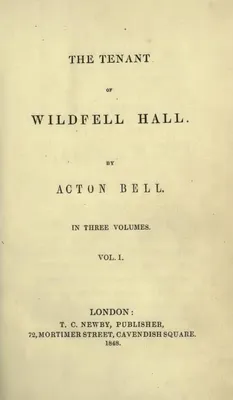
Anne Brontë's "The Tenant of Wildfell Hall" is a groundbreaking novel about a woman escaping an abusive marriage and its societal impact.
Anne Brontë's second and final novel, "The Tenant of Wildfell Hall," was published in 1848 under a pseudonym and quickly gained recognition for its controversial subject matter. The narrative unfolds through letters from Gilbert Markham, detailing his encounter with the enigmatic Helen Graham, a widow who has taken up residence at Wildfell Hall with her son. Helen defies 19th-century conventions by pursuing a career as an artist to support herself and her child. Her reclusive lifestyle and independent spirit lead to village gossip, and Gilbert eventually learns she has fled a deeply abusive relationship to protect her son from his father's harmful influence. The novel is significant for its candid portrayal of marital conflict and a woman's professional aspirations, reflecting Brontë's belief in universal salvation.
Considered one of the earliest feminist novels, "The Tenant of Wildfell Hall" depicts Helen's courageous act of leaving her husband and child, which challenged both social norms and the legal framework of the era. The novel's background reveals potential inspirations for its characters and plot, including aspects of the author's brother Branwell Brontë's struggles with alcoholism and abusive behavior, and the real-life circumstances of a local curate's wife who sought advice from Anne's father. The settings within the novel, such as Wildfell Hall and Grassdale Manor, are thought to be inspired by actual locations in Yorkshire where the Brontë family lived.
Narrative Structure and Themes
The novel employs a frame narrative, primarily told through Gilbert Markham's letters to a friend, which gradually reveals the story of Helen Graham. Gilbert's initial curiosity about the mysterious widow evolves into understanding and empathy as he learns about her past. Helen's pursuit of an artistic career is a notable departure from the expected roles for women in the early 19th century, highlighting themes of female independence and economic self-sufficiency. The novel's exploration of marital abuse, alcoholism, and its impact on family, particularly a child, was considered shocking for its time. Furthermore, the narrative incorporates Anne Brontë's theological perspective, specifically her belief in universal salvation, which offers a hopeful undercurrent despite the grim realities depicted.
Feminist Interpretation and Social Commentary
Critics widely regard "The Tenant of Wildfell Hall" as one of the first feminist novels due to its bold depiction of a woman actively escaping a destructive marriage. Helen's decision to leave her husband and take their son was a profound act of defiance against the legal and social constraints placed upon married women in Victorian England. By portraying the devastating consequences of marital abuse and the societal pressures that kept women trapped, Brontë offered a powerful critique of patriarchal structures. The novel validates a woman's right to protect herself and her child, even if it meant violating societal expectations and risking social ostracization. This aspect of the novel resonated strongly with later feminist movements.
Character Inspirations and Literary Influences
The character of Arthur Huntingdon, Helen's abusive husband, is often linked to Anne Brontë's brother, Branwell, due to shared traits such as physical attractiveness, a history of sexual indiscretions, and particularly, alcoholism. Another potential influence is the story of Mrs. Collins, a woman who sought advice from Anne's father regarding her alcoholic husband's abusive behavior, and who later shared her successful escape and new life with Anne. On a broader literary level, Helen Graham's character may draw parallels with Anna Isabella Milbanke, the first wife of Lord Byron, who also attempted to reform her husband and held Universalist beliefs. The novel's settings, like Wildfell Hall and Grassdale Manor, are believed to be inspired by real locations in Yorkshire, adding a layer of authenticity to the narrative.
Key Ideas
- Critique of marital abuse and alcoholism
- Female independence and economic self-sufficiency
- Challenging 19th-century social and legal norms for women
- Universal salvation
Books by David Frawley . Perhaps nothing is more e
1 free public domain book · Read online or download