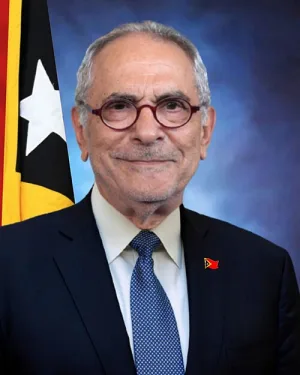
Daniel Chanan Matt
Daniel Chanan Matt
Daniel Matt is a scholar of Jewish mysticism, particularly Kabbalah and Hasidism, focusing on translation and interpretation.
Daniel Matt is a distinguished scholar whose work centers on Jewish mysticism, with a particular emphasis on Kabbalah and Hasidic philosophy. His contributions involve translating and interpreting foundational texts, making complex esoteric concepts accessible to a wider audience. Matt's scholarship delves into the intricate philosophical and spiritual dimensions of these traditions, exploring themes such as divine emanation, creation, and the nature of existence.
His research often engages with key terms and concepts like Ayin (nothingness) and Yesh (existence), examining their significance in understanding the relationship between the Divine and the created world. Through his rigorous academic approach, Matt bridges the gap between ancient mystical teachings and contemporary understanding, highlighting the enduring relevance of these traditions.
Kabbalistic Concepts of Ayin and Yesh
In Kabbalistic thought, Ayin, meaning 'nothingness,' stands in contrast to Yesh, meaning 'existence.' Before creation, only Ayin existed, from which the first Divine emanations, or sephirot, emerged. The sephirah Keter, representing Divine will, acts as a bridge between the Infinite (Ein Sof) and the first emanations. Ayin is closely linked to Ein Sof, the indescribable Divine unity preceding self-manifestation. The concept of creation is understood from two perspectives: 'Yesh me-Ayin' ('Something from Nothing') from the created realm's viewpoint, and 'Ayin me-Yesh' ('Nothing from Something') from the Divine perspective, emphasizing God's sole absolute existence. Since the 13th century, Ayin has been a central term in Kabbalah, notably emphasized in the Zohar, and is associated with the mystical union of being and non-being.
Historical Development and Philosophical Interpretations
The concept of creation 'out of nothingness' (yesh me-Ayin) was articulated by Saadia Gaon in the 9th century. This idea countered Greek philosophical notions of primordial matter or an eternal universe. Jewish philosophers like Maimonides and the author of Sefer Yetzirah adopted this formulation. The Sefer Yetzirah's statement 'He made His Ayin, Yesh' has been interpreted in various ways, often signifying the transition from non-existence to existence. Kabbalists embraced the notion of Ayin as a symbol of supreme existence, paradoxically uniting being and non-being. This concept aligns with negative theology, which posits that God can only be described by what He is not, a principle Kabbalah applied to Ayin.
Ayin-Yesh in Hasidic Philosophy
Hasidism internalizes Kabbalistic ideas, focusing on the psychological experience of cleaving to God (Deveikut) and perceiving a paradoxical Divine presence in all existence. Hasidic masters like Dov Ber of Mezeritch taught that individuals should perceive themselves as Ayin, realizing the unity of absolute existence and nothingness to achieve spiritual ascent. This involves the annihilation of the ego (Bittul) in the Divine Ayin. Schneur Zalman of Liadi further developed Hasidic thought into an intellectual system, interpreting Kabbalistic structures, including Ayin, within a doctrine of Panentheism. His teachings explore the illusionary nature of created existence from the Divine perspective, where all is nullified before God, contrasting with the human perception of distinct existence sustained by Divine life force.
Atzmus and the Resolution of Paradoxes
Within the Chabad system of Hasidic thought, the term Atzmus (Divine Essence) is used to denote the ultimate reality beyond even the Ein Sof (Unlimited Infinite). Atzmus signifies that God's essence is equally manifest in finitude as in infinitude, challenging the limitations of the Infinite-Finite relationship. This concept is exemplified by the Talmudic account of the Ark of the Covenant occupying no physical space. The Hasidic interpretation posits that the ultimate purpose of creation is for God to have a dwelling place in the lower realms, fulfilled through observance. This perspective emphasizes the revelation of Divinity in the physical world, which is seen as more significant than its revelation in heavenly realms, ultimately resolving the paradoxes inherent in the Ayin-Yesh dynamic.
Key Ideas
- Ayin: Kabbalistic concept of 'nothingness' preceding creation, contrasted with Yesh ('existence').
- Yesh me-Ayin: The principle of 'Something from Nothing' in creation.
- Ein Sof: The Infinite, indescribable Divine unity prior to self-manifestation.
- Sephirot: Divine emanations in Kabbalah.
- Deveikut: Hasidic concept of 'cleaving' or attachment to God.
- Bittul: Annihilation of the ego in Hasidic meditation.
- Panentheism: The belief that Divinity permeates all existence.
- Atzmus: The ultimate Divine Essence, beyond even infinite expression.
Notable Quotes
“Nothingness (ayin) is more existent than all the being of the world. But since it is simple, and all simple things are complex compared with its simplicity, it is called ayin.”
“AYIN means No-Thing. AYIN is beyond Existence, separate from any-thing. AYIN is Absolute Nothing. AYIN is not above or below. Neither is AYIN still or in motion. There is nowhere where AYIN is, for AYIN is not. AYIN is soundless, but neither is it silence. Nor is AYIN a void – and yet out of the zero of AYIN'S no-thingness comes the one of EIN SOF”
“one should think of one's self as Ayin, and that "absolute all" and "absolute nothingness" are the same, and that the person who learns to think about himself as Ayin will ascend to a spiritual world, where everything is the same and everything is equal: "life and death, ocean and dry land."”
“He is one in the heaven and on earth... because all the upper worlds occupy no space to be Yesh and something separate in itself, and everything before Him is as Ayin, verily as null and void, and there is nothing beside Him. (Torah Or Mi-Ketz p.64)”
Books by Daniel Chanan Matt
1 free public domain book · Read online or download