Cypress Rousseau
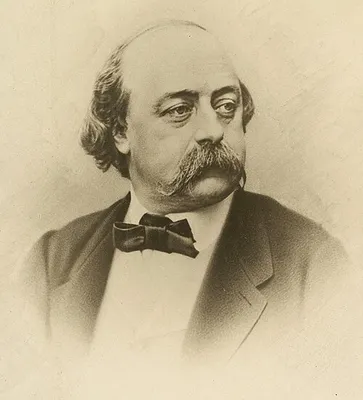
Gustave Flaubert was a leading French realist novelist known for his meticulous style and works like Madame Bovary.
Gustave Flaubert, born in 1821, was a prominent French novelist recognized as a primary figure of literary realism. He is celebrated for his debut novel, *Madame Bovary* (1857), his extensive correspondence, and his unwavering dedication to aesthetic perfection and precise language. Despite an early interest in law, Flaubert abandoned his studies after an epileptic episode and dedicated himself to writing.
Flaubert spent most of his life in Croisset, near Rouen, after leaving Paris. His personal life included a significant relationship with poet Louise Colet, documented in surviving letters. He traveled extensively, including to the Middle East, where he contracted syphilis. Flaubert never married and expressed a desire not to pass on the burdens of existence to children. He was open about his sexual encounters in his writings. He was a diligent worker, often lamenting the difficulty of his craft, and maintained friendships with notable literary figures of his time.
His writing career began with *November* in 1842. After receiving criticism on his early work *The Temptation of Saint Anthony*, he shifted focus to more grounded subjects, leading to *Madame Bovary*. He continued to produce novels such as *Salammbô* and *Sentimental Education*, and also wrote drama and short stories. His final, unfinished novel, *Bouvard et Pécuchet*, was a satire on human knowledge. Flaubert died in 1880, leaving behind a legacy as a master stylist.
Literary Style and Philosophy
Flaubert is renowned for his rigorous pursuit of "le mot juste" (the right word), believing it essential for high literary quality. He meticulously avoided imprecise language, abstract notions, and clichés, striving for an exact expression of his ideas. This dedication to style was a painstaking process, often involving weeks to complete a single page, and characterized by constant revision. He described his ideal style as rhythmic, precise, and capable of conveying thought with clarity and depth, aiming for a presence that was pervasive yet invisible, akin to God in the universe. This laborious approach resulted in a less prolific output compared to his contemporaries, earning him the moniker "martyr of style."
Personal Beliefs and Experiences
Politically, Flaubert identified as a "romantic and liberal old dunce" and an "enraged liberal," opposing all forms of despotism and championing individual resistance against authority. His travels, particularly to the Middle East, exposed him to various cultures and experiences, including contracting syphilis and engaging in sexual encounters with prostitutes, which he documented in his writings. He chose not to marry or have children, articulating a philosophy of not wishing to pass on the difficulties of life. Flaubert's life was marked by periods of ill health and financial strain, particularly later in life following his mother's death and his niece's husband's business failures.
Influence and Legacy
Flaubert's impact on modern realist narration is profound, with critics suggesting a distinct literary era before and after his work. His emphasis on detailed observation, objective composure, and the subtle yet traceable authorial voice has become foundational to much contemporary prose. While also appreciated by formalists, his blend of romantic and realist elements has led various literary schools to claim him as an origin point. His precise and economical style significantly influenced 20th-century writers like Franz Kafka and J. M. Coetzee, who adopted his approach of using precise language, often drawn from scientific or legal contexts, to achieve ironic clarity without overt sentimentality.
Key Ideas
- Le mot juste (the right word)
- Literary realism
- Perfectionist style
- Authorial detachment
Notable Quotes
“trying to write harmonious sentences, avoiding assonances”
“transmit to no one the aggravations and the disgrace of existence”
“an author in his book must be like God in the universe, present everywhere and visible nowhere.”
“The greatest literary influence upon Kafka was Flaubert's. Flaubert who loathed pretty-pretty prose would have applauded Kafka's attitude towards his tool. Kafka liked to draw his terms from the language of law and science, giving them a kind of ironic precision, with no intrusion of the author's private sentiments; this was exactly Flaubert's”
Books by Cypress Rousseau
1 free public domain book · Read online or download