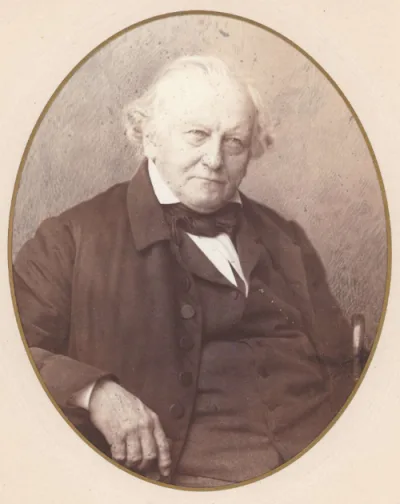
Crystal.
Ben Crystal is an English actor and author known for promoting Shakespeare through original practices and pronunciation.
Ben Crystal, born in 1977, is an English actor, producer, and author recognized for his dedication to the performance and promotion of William Shakespeare's works. He is particularly known for his exploration and adaptation of original performance practices and pronunciation. Crystal grew up in England and Wales, studying English and linguistics at Lancaster University before pursuing acting. His career has involved significant work with Shakespeare's Globe Theatre, where he has performed, curated events, and led ensembles focused on historical performance methods.
His contributions extend to producing recordings of Shakespearean speeches and sonnets in their original pronunciation for the British Library. Crystal has also led experimental theatre projects, including adaptations of Shakespearean plays using historical music, puppetry, and innovative rehearsal techniques. He has collaborated with his father, linguist David Crystal, on several books and projects, notably focusing on Shakespeare's language and its historical pronunciation. His work has been recognized with awards and features in academic and public forums, including TED talks and podcasts.
Performance and Curation of Original Practices
Ben Crystal has established a significant career in performing and promoting Shakespeare by focusing on original practices. He has appeared at Shakespeare's Globe, performing in plays such as Titus Andronicus. Beyond performing, Crystal has curated numerous Shakespearean explorations for institutions like Shakespeare's Globe, the Savannah Music Festival, and the Swedish Radio Symphony Orchestra. He founded the Passion in Practice Shakespeare Ensemble in 2010, which received an Owle Schreame Award for its innovation in historical theatre, specifically for work on Original Shakespearean Pronunciation in performance. The ensemble has undertaken international tours, adapting plays using Elizabethan rehearsal methods and incorporating elements from modern theatrical traditions like Kabuki. In recent years, Crystal has also explored digital theatre, creating experimental virtual productions that allow audiences to influence their narrative experience.
Exploration of Original Pronunciation
A central theme in Ben Crystal's work is the exploration of Shakespeare's original pronunciation (OP). Collaborating with his father, linguist David Crystal, he has been instrumental in bringing OP to contemporary audiences. This work includes advising on productions at the Globe Theatre and conducting research in the Sam Wanamaker Playhouse. Crystal has recorded speeches in OP for the British Library and has acted in various roles, including Hamlet and Richard II, in original pronunciation. He has produced and directed productions of plays like Macbeth, Henry V, and Dr. Faustus in OP at the Sam Wanamaker Playhouse. His ensembles have also performed these works internationally, engaging audiences with the sound and rhythm of Shakespearean language as it was originally intended.
Author and Educator
As an author, Ben Crystal has written extensively on Shakespeare, aiming to make the Bard's work accessible. His book 'Shakespeare on Toast: Getting a Taste for the Bard' was recognized with a nomination for an Educational Writers Award. He has co-authored several books with his father, David Crystal, including 'Shakespeare's Words: A Glossary and Language Companion,' which aimed to address omissions in existing Shakespearean glossaries. Other collaborative works include 'The Oxford Illustrated Dictionary of Shakespeare.' Crystal frequently engages in public speaking, giving talks and workshops on Shakespearean language and performance practices, including a TED talk titled 'Original Practice – Shakespeare's Craft.' He has also contributed to academic discussions through podcasts and lectures, further disseminating his expertise.
Key Ideas
- Promoting William Shakespeare through performance and academic study.
- Revival and adaptation of original Shakespearean performance practices.
- Exploration and application of Shakespeare's original pronunciation.
- Making Shakespeare's language and works accessible to modern audiences.