Cottage Wytch
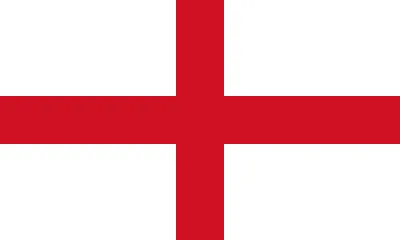
England, a country within the UK, has a rich history influencing language, law, and culture globally.
England, a constituent country of the United Kingdom, occupies the majority of the island of Great Britain. Its history stretches back to the Upper Paleolithic, with its name originating from the Germanic Angles who settled in the 5th and 6th centuries. Unified as a state by the 10th century, England's cultural and legal systems have had a significant global impact since the Age of Discovery. The country is the birthplace of the English language, the common law system, association football, and the Anglican Church. The Industrial Revolution began here in the 18th century, transforming it into the world's first industrialized nation. England is also home to two of the oldest and most prestigious universities in the English-speaking world: Oxford and Cambridge.
The terrain of England is primarily characterized by low hills and plains, with more mountainous regions in the north and west. The population, over 56 million, is largely concentrated around major urban areas, particularly London. The name 'England' itself comes from the Old English 'Englaland,' meaning 'land of the Angles.' Early references to the Angles appear in Roman texts from the 1st century. While the exact reason for this tribe's name becoming associated with the entire country is unclear, it is thought to be related to distinguishing them from continental Saxons. Poetic names for England include Loegria and Albion.
Early Inhabitants and Cultural Shifts
The land now known as England was first occupied by modern humans in the Upper Paleolithic period. Following the last ice age, approximately 11,000 years ago, the area was repopulated by humans migrating from the Iberian Peninsula. As sea levels rose, Britain became isolated from Ireland and Eurasia. Around 4100 BC, Neolithic farmers arrived, followed by the Beaker culture around 2500 BC, who introduced pottery and metalworking, leading to the creation of bronze and iron. The Iron Age saw the arrival of Celtic culture and the Brythonic language. The region had established trade links with the Roman Republic, with Julius Caesar attempting invasions in 55 BC.
Roman Influence and Early Christianity
The Roman invasion in 43 AD brought much of Britain under Roman rule as the province of Britannia. This period saw significant conflict with native tribes like the Catuvellauni and the Iceni, led by Boudica. The Roman presence introduced Greco-Roman culture, law, architecture, and infrastructure such as aqueducts and sewers. Christianity was present by the 4th century, with traditions suggesting its earlier introduction. Following the Roman withdrawal in 410 AD, Britain was left vulnerable, leading to the settlement of Germanic tribes like the Saxons, Angles, Jutes, and Frisians. This era, often termed the 'Dark Ages' due to scarce contemporary texts, saw the gradual replacement of Roman-dominated Christianity with Anglo-Saxon influences, though Celtic Christian monastic traditions persisted in some areas.
Formation of England and Global Legacy
The settlement of Germanic tribes led to the formation of various Anglo-Saxon kingdoms, eventually unifying into a single state by the 10th century. The name 'England' emerged from 'Englaland,' signifying the land of the Angles. The country's influence expanded significantly from the 15th century onwards during the Age of Discovery. England became the origin of the English language, the common law system adopted by many nations, association football, and the Anglican Church. Its parliamentary system has also been widely emulated. The 18th-century Industrial Revolution, originating in England, transformed its society into the world's first industrialized nation. Furthermore, England hosts the University of Oxford (founded 1096) and the University of Cambridge (founded 1209), two of the oldest and most esteemed universities in the English-speaking world.
Books by Cottage Wytch
1 free public domain book · Read online or download