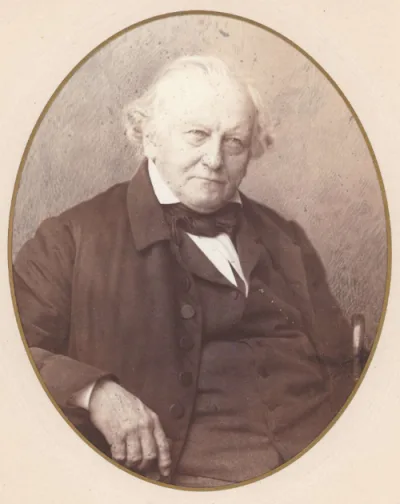
✍️ Author Biography
Cora Anderson
📅 1923 – 2015
🌍 American
📚 3 free books
⭐ Known for: The Last of the Mohicans (1826)
Cora is a name with ancient Greek roots, often linked to Persephone, the goddess of vegetation and the underworld.
The name Cora has a rich etymological history, most commonly linked to the Ancient Greek word 'Kore,' an epithet for Persephone, goddess of vegetation and the underworld. This Greek origin signifies 'girl' or 'maiden' and was used to denote Persephone's role as the daughter of Demeter. Certain Greek dialects, like Doric and Aeolic, pronounce 'Kore' in a way that closely resembles the modern English pronunciation of Cora. The name also appears in Roman inscriptions as a Latinization of Persephone's epithet. Historically, various theories suggest other origins, including a rare potential link to the Gaelic word for 'good' or 'honest,' and a claim by Theophilus Gale in the 17th century that it derived from the Hebrew 'hora.' The name gained wider recognition through Jean-François Marmontel's 1777 novel 'Les Incas,' where it was given to a maiden consecrated to the sun, echoing its original Greek meaning. This literary popularity led to its use in subsequent operas and plays, and notably by James Fenimore Cooper for a character in his 1826 novel 'The Last of the Mohicans.'
Ancient Greek Origins and Persephone
The name Cora is predominantly understood to originate from the Ancient Greek word 'κόρη' (korē), meaning 'girl,' 'maiden,' or 'daughter.' This epithet was particularly associated with Persephone, the Greek goddess of vegetation and the underworld, highlighting her role as the daughter of Demeter. When invoked as 'Kore,' Persephone was often referenced not in her capacity as queen of the underworld, but as a deity connected to the earth's fertility and growth. The pronunciation of Cora in modern English is mirrored in some ancient Greek dialects; for instance, in Doric and Aeolic Greek, 'korē' could be pronounced as 'kora' or 'kōra,' phonetically aligning with the contemporary name. This Greek term also carried metaphorical meanings, extending to 'puppet' or 'pupil of the eye,' signifying a reflection or a cherished entity.
Literary and Historical Popularity
While the Greek origins are most prominent, the name Cora has seen varied usage and interpretation throughout history. In Roman contexts, 'Cora' appeared as a Latinized form of Persephone's epithet in inscriptions. Later, in the modern era, the name achieved broader recognition through literary works. Jean-François Marmontel's 1777 novel 'Les Incas' featured a character named Cora, a maiden dedicated to the sun, which aligned with the name's original association with maidenhood and divinity. This popularization spurred further artistic use, with composers and playwrights incorporating the name into their works, notably in an opera by Étienne Méhul and a play by August von Kotzebue. James Fenimore Cooper subsequently adopted the name for his heroine in 'The Last of the Mohicans' in 1826, further cementing its presence in popular culture.
Key Ideas
- Connection to Persephone, the Greek goddess of vegetation and the underworld.
- Etymological link to the Greek word 'korē' meaning 'girl' or 'maiden'.
- Literary popularization through novels and subsequent artistic adaptations.