Constantine N Tsirpanlis
Constantine N. Tsirpanlis's biography focuses on his historical analysis of the Greco-Italian War and its geopolitical context.
Constantine N. Tsirpanlis authored an account of the Greco-Italian War, a significant conflict that began the Balkan campaign of World War II. The war, which lasted from October 1940 to April 1941, saw Italy invade Greece following a period of escalating tensions, including Italian provocations and the sinking of a Greek cruiser. Despite initial Italian setbacks due to tenacious Greek resistance and difficult terrain, the front eventually stabilized. However, increased British involvement prompted Germany to intervene, leading to the German invasion of Greece in April 1941. Greece ultimately surrendered to Axis forces, resulting in its occupation. The war inflicted heavy casualties on both Italian and Greek forces. Tsirpanlis's work also delves into the broader geopolitical ambitions of Fascist Italy in the Mediterranean and Balkans during the interwar period, including its imperialistic aims and attempts to establish regional hegemony. It further examines the complex diplomatic relations between Greece and Italy, highlighting periods of both tension and attempted rapprochement, particularly concerning territorial disputes and regional alliances.
The Greco-Italian War: A World War II Conflict
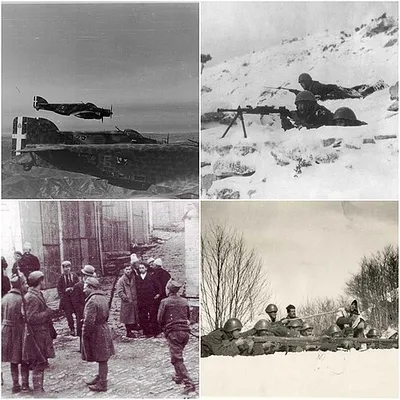
The Greco-Italian War, also known as the Italo-Greek War, commenced on October 28, 1940, and concluded on April 23, 1941. This engagement marked the beginning of the Balkan campaign within the broader context of World War II. The conflict escalated after Italy, having declared war on France and the United Kingdom in June 1940 and engaged in other invasions, initiated a hostile press campaign against Greece, accusing it of being a British ally. Tensions culminated with the Italian sinking of the Greek light cruiser Elli on August 15, 1940. An ultimatum demanding territorial concessions was issued by Mussolini to Greece on October 28, 1940, but was rejected by Greek Prime Minister Ioannis Metaxas.
Italian Imperialism and Balkan Ambitions
In the late 1920s, Italian Prime Minister Benito Mussolini articulated Fascist Italy's need for "Spazio vitale" (vital space) for its surplus population, advocating for Italian expansion. The regime aimed for Mediterranean–Danubian–Balkan hegemony, with Mussolini envisioning an empire stretching from Gibraltar to Hormuz. Specific ambitions included establishing a protectorate over Albania and annexing Dalmatia, alongside gaining economic and military control over Yugoslavia and Greece. Italy also sought protectorates over Austria, Hungary, Romania, and Bulgaria, positioning them within an Italian European sphere of influence. These imperialistic designs were further fueled by the Second Italo-Ethiopian War (1935) and Italy's significant military contribution to the Nationalist victory in the Spanish Civil War (1936), which helped place Italy on a war footing and foster a "warrior culture".
Interwar Greek-Italian Relations and Regional Dynamics
During the interwar period, Greek-Italian relations were marked by historical grievances and shifting geopolitical strategies. Italy's capture of the Dodecanese Islands in 1912, which were predominantly Greek-inhabited, and subsequent retention despite agreements, created ongoing friction. Mussolini's bombardment and temporary occupation of Corfu in 1923, using the murder of an Italian general as a pretext, further strained ties. Following the Greek defeat in Anatolia and the Treaty of Lausanne (1923), Greek foreign policy focused on preserving the status quo, although territorial claims to Northern Epirus and the Dodecanese remained. While Greece faced threats from Bulgaria, it also navigated complex diplomatic landscapes, seeking to normalize relations with neighbors and drawing closer to Britain. A trade agreement in 1926 and a treaty of friendship in 1928 marked a period of rapprochement, which Mussolini exploited to diplomatically isolate Yugoslavia. Despite Venizelos rebuffing an alliance offer, Mussolini assured Greek sovereignty over Macedonia and pledged support against external attacks.
The Greek Counter-Offensive and Axis Intervention
Italy's initial invasion of Greece, launched from Albania with poorly equipped and commanded divisions, met unexpectedly strong resistance from the Hellenic Army. The Italian forces penetrated only a few kilometers into rugged terrain before being halted. With British air and material support, the Greeks not only stopped the invasion but launched a counter-offensive by mid-November 1940, pushing Italian forces back into Albania. This advance culminated in the Capture of Klisura Pass in January 1941. Historian Mark Mazower has described this Greek success as the "first Axis setback of the entire war." By February 1941, the front had stabilized, with Italy reinforcing its positions significantly. Despite costly battles and an unsuccessful Italian spring offensive in March, Greece faced critical shortages of men, material, and ammunition, lacking the capacity to replenish its forces as Italy could. The poor quality of Italian equipment and low morale were noted throughout the campaign.
Books by Constantine N Tsirpanlis
0 free public domain books · Read online or download
