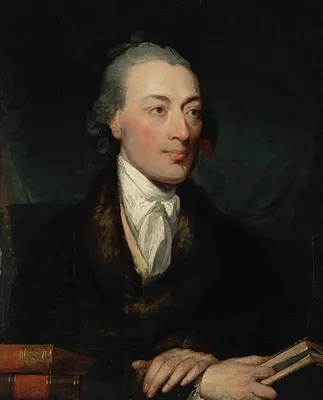
Constantin-François Volney
Constantin-François Volney was a French philosopher and politician known for his critique of religion and history, and his travels in the East.
Constantin-François Volney, a French philosopher, historian, orientalist, and politician, gained prominence for his observations on history and religion. Born into a noble family, he initially pursued law and medicine before dedicating himself to classical studies. His early intellectual circle included prominent Enlightenment figures. Volney embarked on extensive travels to Egypt and Syria, meticulously documenting his experiences and observations. Upon returning to France, he became involved in the French Revolution, representing his region in the Estates General and participating in the National Constituent Assembly. He was also imprisoned during the Reign of Terror.
Volney's most influential work, 'The Ruins,' explored the decline of empires and questioned religious narratives, notably being one of the first to advance the Christ myth theory. His travels also led to his work on the climate and soil of the United States after he was temporarily expelled from the country. Throughout his career, Volney held various political positions, serving as a Senator and later as a Peer of France. He was a member of several prestigious academies, reflecting his broad intellectual contributions, which also included the creation of a universal alphabet.
Philosophical and Historical Inquiries
Constantin-François Volney's intellectual pursuits extended deeply into the nature of history, religion, and human society. His seminal work, 'The Ruins' (1791), offered a profound meditation on the rise and fall of civilizations, challenging established historical and religious orthodoxies. Within this text, Volney was among the earliest proponents of the Christ myth theory, suggesting that Jesus was not a historical figure but rather a symbolic or allegorical creation derived from ancient mythologies. This perspective was shared by contemporaries like Charles-François Dupuis and supported by figures such as Benjamin Franklin and Thomas Jefferson. Volney's approach sought to uncover universal truths underlying diverse belief systems, envisioning a future where all religions might converge through the recognition of shared fundamental principles.
Travels and Observations in the East
Volney's journey to Ottoman Egypt and Syria, undertaken in the early 1780s, was a pivotal experience that significantly shaped his understanding of history and culture. He spent considerable time immersing himself in the region, learning Arabic and meticulously documenting the landscapes, peoples, and ancient monuments. His published accounts of these travels, particularly 'Voyage en Égypte et en Syrie,' garnered international acclaim, even earning him recognition from Empress Catherine II of Russia. During his observations, Volney made early, albeit later retracted, assertions about the racial characteristics of the Sphinx and engaged in critical reflections on the paradoxes of freedom and slavery. These travels provided him with firsthand material for his philosophical analyses of societal development and the legacy of ancient civilizations.
Political Engagement and Later Life
Beyond his scholarly endeavors, Volney was actively involved in the political landscape of France. He represented the commoners of Anjou in the Estates General and was a member of the National Constituent Assembly during the French Revolution. His political involvement led to periods of imprisonment, notably during the Reign of Terror. Following his expulsion from the United States, where he was suspected of espionage, Volney returned to France and continued to play a role in national affairs, serving as a Senator under Napoleon and later as a Peer of France after the Bourbon Restoration. He was a member of esteemed institutions like the Académie Française and the American Philosophical Society, contributing to the intellectual and political discourse of his time.
Key Ideas
- Christ myth theory: Jesus as a mythical, rather than historical, figure.
- Critique of religious dogma and exploration of universal truths in religions.
- Analysis of the rise and fall of empires and civilizations.
- Advocacy for reason and empirical observation in understanding history and society.
- Creation of a universal alphabet.
Books by Constantin-François Volney
0 free public domain books · Read online or download