Colby Gray
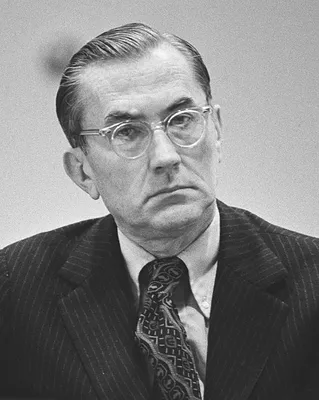
William Colby was a CIA Director known for overseeing the Phoenix Program and bringing relative openness to intelligence during congressional investigations.
William Egan Colby served as the Director of Central Intelligence (DCI) from 1973 to 1976. His career in intelligence began with the Office of Strategic Services during World War II, where he worked with resistance forces in Europe. After the war, he joined the newly formed CIA, holding significant positions in Southeast Asia, including Chief of Station in Saigon and head of the Civil Operations and Rural Development effort (CORDS), which encompassed the controversial Phoenix Program.
During his tenure as DCI under Presidents Nixon and Ford, Colby faced intense scrutiny from Congress, particularly from the Church and Pike Committees investigating intelligence activities. In response to this pressure, he implemented a policy of greater transparency regarding U.S. intelligence operations. Colby's leadership also coincided with significant global events, including the Yom Kippur War. His career was marked by a commitment to service, influenced by his liberal political beliefs and Catholic upbringing, and he was known for his media-friendly approach to the role of DCI.
Early Life and Influences
Born in 1920, William Colby's upbringing was shaped by his father, Elbridge Colby, a professor and author with a background in military and public service, who instilled in him a desire to serve and a commitment to liberal politics. His mother's family was involved in business and Democratic Party politics in St. Paul. Colby's early life involved frequent moves due to his father's career, before he settled in Vermont. He attended Princeton University, graduating in 1940 with a degree in politics, and later studied at Columbia Law School. His father's career choices, which prioritized intellectual contributions over strict military adherence, and his grandfather's early death and financial struggles, provided a complex family backdrop. Colby identified with his parents' dedication to service, liberal principles, Catholicism, and a sense of independence.
World War II and Early CIA Career
Colby volunteered for the Army in 1941, serving with the Office of Strategic Services (OSS) as a 'Jedburgh.' In this role, he was trained to collaborate with resistance movements in occupied Europe. During World War II, he undertook dangerous missions, including parachuting behind enemy lines twice, and was recognized with the Silver Star and commendations from Allied nations. He participated in operations in France and Norway, focusing on sabotage and disrupting enemy forces. Following the war, he completed his law studies and briefly practiced law before joining the CIA. His initial assignments with the agency included establishing stay-behind networks in Sweden and leading covert political operations in Rome to counter communist influence in Italy, where he engaged with anti-communist parties.
Vietnam Operations and Leadership
Colby's career significantly involved operations in Southeast Asia, particularly in Vietnam. He served as the deputy and then chief of station in Saigon from 1959 to 1962, working to support the South Vietnamese government. He focused on developing local capabilities to combat the Viet Cong insurgency, believing the conflict's resolution lay in the villages. Returning to Washington, he headed the CIA's Far East Division, influencing U.S. policy in the region. In 1968, he was sent back to Vietnam to lead CORDS, a rural pacification program. This effort included the Phoenix Program, aimed at dismantling the Viet Cong infrastructure, though it faced controversy regarding alleged abuses. Colby maintained that such tactics were not officially sanctioned. He was part of a leadership shift towards pacification and securing the countryside, a strategy that some believe was successful but ultimately insufficient without continued U.S. support.
Director of Central Intelligence and Legacy
In 1973, William Colby was appointed Director of Central Intelligence (DCI), a position he held for two and a half years during a period of intense congressional oversight. He served under Presidents Nixon and Ford. His tenure was marked by the Church and Pike Committee investigations into alleged intelligence misconduct. Colby initiated a policy of relative openness, providing information to these committees. This period also saw major international events, such as the Yom Kippur War, which presented intelligence challenges. Colby's approach was seen as professional and reform-minded, aiming to bring more transparency to the agency. He was succeeded by George H. W. Bush in 1976. His career, influenced by his Catholic faith and liberal politics, spanned significant moments in 20th-century intelligence history.
Books by Colby Gray
1 free public domain book · Read online or download