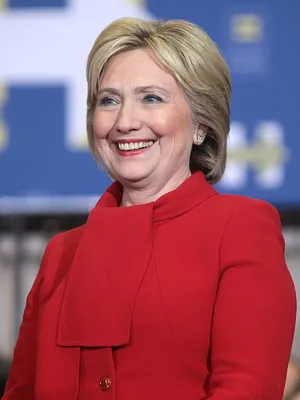
Clinton Kevin
William Jefferson Clinton, the 42nd U.S. President, shaped American politics with his centrist 'Third Way' philosophy.
William Jefferson Clinton, born August 19, 1946, served as the 42nd President of the United States from 1993 to 2001. A Democrat, he previously held positions as Arkansas Attorney General and Governor. His presidency was marked by a centrist political approach known as 'Clintonism,' which significantly influenced the Democratic Party. Clinton's early life was spent in Arkansas, and he pursued higher education at Georgetown University and Yale Law School, where he met his future wife, Hillary Rodham. He began his political career in Arkansas, eventually becoming governor and focusing on education reform.
As president, Clinton oversaw a period of significant economic growth and signed into law major legislation like NAFTA. His administration navigated complex foreign policy challenges, including interventions in Bosnia and Kosovo, and promoted the expansion of NATO. Domestically, his policies evolved over time, incorporating more conservative elements while still supporting certain liberal initiatives. His presidency also faced significant public scrutiny due to personal scandals, leading to impeachment proceedings. Post-presidency, Clinton has remained active in humanitarian efforts and public speaking.
Early Life and Influences
Born William Jefferson Blythe III in Hope, Arkansas, Clinton's early life was shaped by his mother's pursuit of nursing and his stepfather's struggles with gambling and alcoholism. Despite a difficult home environment, he excelled academically and musically, playing saxophone in a jazz trio and participating in student leadership. Clinton's interest in law was sparked by a mock trial in Latin class, and he was profoundly influenced by his experiences as a Boys Nation senator meeting President John F. Kennedy and witnessing Martin Luther King Jr.'s "I Have a Dream" speech. He was briefly associated with the Order of DeMolay, a Masonic youth group, but never became a Freemason. He considered a career in music before choosing law and politics.
Academic and Political Formation
Clinton attended Georgetown University on scholarship, earning a degree in Foreign Service in 1968. During his time there, he was elected class president and interned for Senator J. William Fulbright. He later attended Oxford University as a Rhodes Scholar, studying philosophy, politics, and economics, and subsequently politics. His time at Oxford was marked by friendships, including with Frank Aller, whose suicide had a significant impact on Clinton's views on activism and the Vietnam War. Clinton also participated in university sports, including basketball and rugby. He ultimately left Oxford early to attend Yale Law School, where he met Hillary Rodham.
Presidency and Policy
As the 42nd President, Clinton's tenure (1993-2001) was characterized by a centrist 'Third Way' approach. He presided over a sustained period of economic expansion and signed key legislation such as the North American Free Trade Agreement (NAFTA), the Brady Handgun Violence Prevention Act, and the Violent Crime Control and Law Enforcement Act. His administration faced challenges, including the failure to pass national health care reform and a controversial policy on gay and lesbian servicemembers. Following the 1994 midterm elections, Clinton adopted more conservative domestic policies, advocating for welfare reform and financial deregulation, while also championing programs like the State Children's Health Insurance Program. He appointed Ruth Bader Ginsburg and Stephen Breyer to the Supreme Court. In foreign affairs, he authorized military interventions in Bosnia and Kosovo, supported NATO expansion, and engaged in peace processes in the Middle East and Northern Ireland.
Second Term and Legacy
Clinton secured re-election in 1996. His second term was significantly impacted by the public revelation of his affair with White House intern Monica Lewinsky, leading to his impeachment by the House of Representatives on charges of perjury and obstruction of justice. He was acquitted by the Senate in 1999. During his final years, the U.S. experienced budget surpluses. He left office with high approval ratings. Clinton's presidency is generally ranked in the upper tier of U.S. presidents, though his personal conduct has drawn scrutiny. Post-presidency, he has been involved in humanitarian work through the Clinton Foundation, addressing global issues like HIV/AIDS and climate change. He also served as a UN special envoy to Haiti and remains active in Democratic politics.
Key Ideas
- 'Third Way' political philosophy: A centrist approach blending elements of liberalism and conservatism.
- 'Clintonism': The political ideology associated with his presidency and its lasting impact on the Democratic Party.
Books by Clinton Kevin
0 free public domain books · Read online or download
