CLAUDE PAQUET
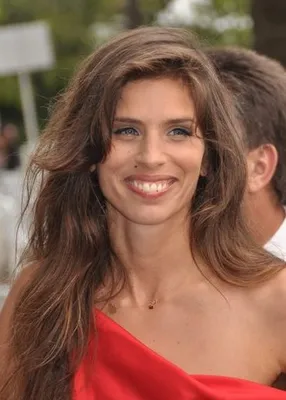
French actress and filmmaker Maïwenn's work often explores personal trauma, family dynamics, and the nature of storytelling.
Maïwenn Le Besco, known mononymously as Maïwenn, is a French actress and filmmaker born in 1976. Her early life was marked by difficult relationships with her parents, including reported abuse, which she later explored in her films. She has mixed Breton, Vietnamese, French, and Algerian heritage and holds Algerian citizenship.
Her career began in acting during childhood and adolescence. After a hiatus following her marriage to Luc Besson and the birth of their daughter, she returned to filmmaking. Maïwenn transitioned into directing, inspired by filmmakers like Claude Lelouch. Her directorial work, including "Pardonnez-moi," "Le bal des actrices," and the award-winning "Polisse," often features her in front of the camera and delves into autobiographical themes and the process of filmmaking itself, sometimes incorporating the concept of mise en abyme. Her later films, such as "Mon roi" and "Jeanne du Barry," have also received international attention and festival selections.
Early Life and Influences
Born Maïwenn Le Besco in 1976, her childhood was significantly shaped by challenging family dynamics. She has spoken about experiencing abuse from both her parents following their separation, experiences that later informed her directorial efforts, particularly "Pardonnez-moi" and "Polisse." Her mixed heritage, encompassing Breton, Vietnamese, French, and Algerian roots, also played a role in her identity, leading her to acquire Algerian citizenship to honor her grandparents. Pressured by her mother to pursue acting from a young age, Maïwenn chronicled these early experiences in her one-woman shows.
Filmmaking Career and Thematic Exploration
Maïwenn's career spans acting and directing, with a notable shift towards filmmaking after her marriage to Luc Besson and the birth of their daughter. She took a break from acting, appearing in a small role in Besson's "Léon" and as the alien Diva Plavalaguna in "The Fifth Element." Upon returning to France after her divorce from Besson, she explored stand-up comedy before re-entering the film industry. Her directorial debut, "Pardonnez-moi," was a personal drama that earned her award nominations. Subsequent films like "Le bal des actrices" and the Cannes Jury Prize winner "Polisse" often feature her as an actress and explore themes of family, personal experience, and the nature of filmmaking, frequently incorporating the narrative device of a story within a story (mise en abyme).
Artistic Approach and Personal Life
Maïwenn's directorial style was influenced by observing the freedom of directors like Claude Lelouch, leading her to embrace a filmmaking approach that incorporates life's unpredictability. Her personal life, including her relationship with Luc Besson and subsequent marriage to Jean-Yves Le Fur, has been intertwined with her professional work, with some films drawing inspiration from these experiences. Her son, Diego, even made his acting debut in her film "Jeanne du Barry." In 2023, Maïwenn faced accusations of assault, adding a complex dimension to her public persona.
Key Ideas
- Exploration of personal trauma and difficult family relationships
- Autobiographical elements in filmmaking
- The process and nature of storytelling within film
- Mise en abyme (story within a story)
Notable Quotes
“she was abused by both her parents after their separation, having been beaten physically and verbally by her father around the age of seven or eight, and then by her mother during her adolescence”
“she was a poison for me. She poisoned my life.”
“she was crazy”
“I saw a totally free man, capable of adapting to accidents on the set. ...there are two types of directors: those who love life and use it for their films, and those who don’t love it and try to twist it to make it fit into their films. From that day on, I had chosen my side – the side of freedom, that of Lelouch.”
“I think you should go for it. Cinema should be a question of life or death.”
Books by CLAUDE PAQUET
1 free public domain book · Read online or download