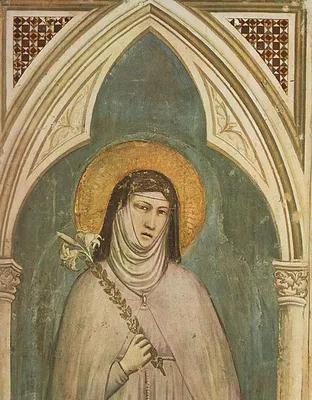
Clara
Clara is a name of Latin origin meaning 'clear, bright, famous,' popularized by Saint Clare of Assisi and borne by many notable women.
The name Clara, derived from the Late Latin 'Clarus,' signifies 'clear, bright, and famous.' Its feminine form gained prominence following the 13th-century canonization of Saint Clare of Assisi, a follower of Saint Francis who established the Poor Clares. While historically Clare was the more common English variant during the Middle Ages, the Latin spelling 'Clara' saw increased popularity in the 19th century. A related Kurdish name, Glara, shares a similar etymological root, meaning 'vision or brightness.' The name has been adopted by a diverse array of individuals across various fields, including arts, sciences, sports, and activism, demonstrating its enduring appeal throughout history.
Etymological Roots and Historical Popularity
The name Clara originates from the Late Latin masculine name Clarus, meaning 'clear, bright, or famous.' Its feminine form became widely recognized and adopted due to Saint Clare of Assisi, a significant figure in the 13th century. A disciple of Saint Francis, she renounced her affluent upbringing to found the Order of Poor Ladies, later known as the Poor Clares. While the variant 'Clare' was prevalent in England during the medieval period, the Latinized spelling 'Clara' experienced a resurgence in popularity during the 19th century. The name's resonance extends to other cultures, with the Kurdish name Glara sharing a common origin and meaning 'vision or brightness.'
Notable Figures Bearing the Name
Throughout history, the name Clara has been associated with numerous influential women across a wide spectrum of disciplines. In the arts, figures like Clara Schumann, a renowned German pianist and composer, and Clara Peeters, a celebrated 17th-century Flemish painter, stand out. Clara Barton, a pioneering American nurse and humanitarian, founded the American Red Cross. The name is also linked to Clara Immerwahr, a German chemist and the first wife of Nobel laureate Fritz Haber, and Clara Collet, a notable British economist and civil servant. The list extends to activists like Clara Lemlich, a union organizer, and Clara Zetkin, a German Marxist theorist and women's rights advocate, highlighting the diverse impact of women named Clara.
Clara in Fictional and Cultural Contexts
The name Clara has also found a significant place in literature, ballet, and film. It is famously the name of the protagonist in Tchaikovsky's beloved ballet, The Nutcracker, and features in adaptations such as Barbie in the Nutcracker. Literary appearances include Clara in E. T. A. Hoffmann's "The Sandman" and the main character in Octave Mirbeau's novel "The Torture Garden." The name also appears in a variety of other media, from the television series Bewitched to the video game Honkai: Star Rail, and even in Bob Dylan's surrealist film Renaldo and Clara. These portrayals showcase the name's versatility and its enduring presence in cultural narratives.
Books by Clara
14 free public domain books · Read online or download