Christopher Hauke Luke Hockley
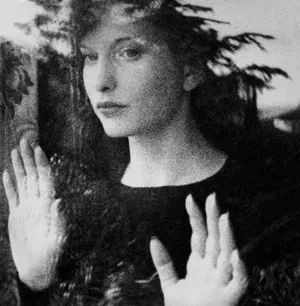
Maya Deren was a Russian-born American experimental filmmaker and avant-garde artist, known for her unique cinematic approach.
Maya Deren, born Eleonora Solomonovna Derenkovskaya in Kiev in 1917, was a significant figure in the American avant-garde film scene of the 1940s and 1950s. She was also a choreographer, dancer, film theorist, poet, lecturer, writer, and photographer. Deren believed film's primary function was to create an experience, integrating her diverse interests including dance, ethnography, Haitian Vodou, symbolist poetry, and Gestalt psychology into her perceptual, black-and-white short films.
Her innovative techniques, such as jump-cutting and superimposition, aimed to disrupt conventional notions of space and time. Deren's early life involved fleeing Ukraine due to antisemitism, immigrating to the United States, and pursuing academic and political activism. She earned multiple degrees in literature and became involved in socialist movements before dedicating herself to the arts. Her personal life included marriages to Alexander Hammid and Teiji Itō, and she adopted the name Maya, a nickname given by Hammid.
Cinematic Philosophy and Esoteric Influences
Maya Deren viewed cinema as an art form capable of eliciting profound experiences, aiming to fill a theoretical void in the independent film landscape. Her work was deeply influenced by a blend of disciplines, notably Haitian Vodou, which she studied extensively and incorporated into her films. This spiritual and ritualistic element, combined with her background in dance, choreography, and symbolist poetry, allowed her to explore the unconscious and subjective realities. Deren's approach to filmmaking was highly conceptual, utilizing experimental techniques like multiple exposures and slow-motion to create dreamlike, non-linear narratives that challenged conventional perceptions of time and space. Her films often delved into themes of introspection, mythology, and the subconscious, reflecting her intellectual curiosity and her belief in film's power to access deeper psychological states.
Pioneering Experimental Film
Deren is widely recognized as a foundational figure in American experimental cinema, with her relatively small body of work—around 75 minutes of finished films—having a substantial impact. Her first and most celebrated film, "Meshes of the Afternoon" (1943), made with her then-husband Alexander Hammid, is considered a landmark of the genre. Deren was deeply involved in every aspect of her filmmaking, often writing, producing, directing, editing, and photographing her own works, frequently with minimal assistance. She actively promoted and distributed her films, lecturing on avant-garde film theory and Vodou. Her successful exhibition at the Provincetown Playhouse in 1946 led to the formation of Cinema 16, a highly influential film society. Deren's contributions were acknowledged with a Guggenheim Fellowship and the Grand Prix International for avant-garde film at Cannes.
Artistic Synthesis and Legacy
The fusion of dance and film, a concept she termed "choreocinema," was a significant aspect of Deren's artistic output, particularly evident in "A Study in Choreography for Camera" (1945). Her explorations often focused on the unconscious, possibly influenced by her father's interest in psychology and states like trance and hypnosis. Deren also frequently addressed themes of gender identity and introspection, weaving mythology into her narratives. Despite the feminist undertones in her work, she was not widely recognized by feminist critics during her lifetime, though later scholars acknowledged her pioneering role. Her unique synthesis of spiritual, psychological, and artistic elements continues to resonate, establishing her as a vital pioneer of experimental and avant-garde cinema.
Key Ideas
- Film's function is to create an experience.
- Exploration of the unconscious and subjective realities through cinema.
- Integration of dance, ethnography, Vodou, and poetry into film.
- Disruption of conventional notions of physical space and time in filmmaking.
- The concept of 'choreocinema' merging dance and film.
Notable Quotes
“Maya Deren defined cinema as an art, provided an intellectual context for film viewing, and filled a theoretical gap for the kinds of independent films that film societies were featuring.”
“Maya was always a Russian. In Haiti she was a Russian. She was always dressed up, talking, speaking many languages and being a Russian.”
Books by Christopher Hauke Luke Hockley
0 free public domain books · Read online or download
