Christopher Coe
Donald Westlake was a prolific American crime fiction author known for his ingenious plots and pseudonyms, including Richard Stark.
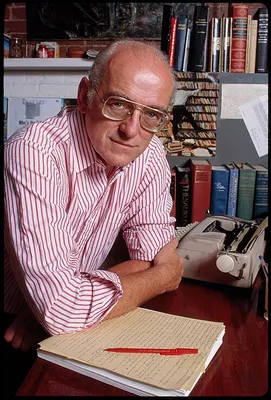
Donald Edwin Westlake (1933–2008) was a highly productive American author, primarily recognized for his crime fiction, which often featured intricate plots and clever schemes. He penned over a hundred novels and non-fiction works, frequently setting his stories in New York City. Westlake developed two significant criminal characters: the tough, hardboiled Parker, published under the pseudonym Richard Stark, and the more lighthearted John Dortmunder. His career included accolades such as three Edgar Awards and the Mystery Writers of America's Grand Master honor. Westlake also explored science fiction and other genres, though he notably announced his departure from the sci-fi field in 1962. He utilized numerous pseudonyms throughout his career, with Richard Stark being the most prominent, allowing him to adopt a distinct, starker writing style. Other pseudonyms included Rolfe Passer, Alan Marshall, and Tucker Coe, often used for specific types of fiction or collaborative projects.
Literary Style and Characters
Donald Westlake was celebrated for the sheer inventiveness of his narratives and the daring nature of his plot devices. His most enduring creations were the morally ambiguous criminal Parker, who appeared in works attributed to Richard Stark, and the often-bumbling but relatable John Dortmunder. Westlake noted that a novel initially conceived as a Parker story, "The Hot Rock," evolved into the first Dortmunder tale because the plot kept becoming unexpectedly humorous. While most of his novels are set in New York City, with specific neighborhoods often playing a role in the Dortmunder series, his writing was characterized by its sharp plotting and distinctive characterizations, whether grim or comedic.
Pseudonymous Writing
Beyond his own name, Westlake employed a variety of pseudonyms, each often serving a distinct purpose or stylistic variation. Richard Stark, his most famous pen name, was used for the Parker novels, characterized by a colder, leaner, and more direct prose style compared to Westlake's own. This pseudonym became so popular that Stark's name sometimes eclipsed Westlake's. Other pseudonyms like Alan Marshall and Edwin West were associated with soft-core erotic fiction, while Tucker Coe featured a mystery series. Westlake also occasionally used pseudonyms playfully, sometimes incorporating them into his plots or characters' identities, demonstrating a creative engagement with his multiple authorial personas.
Career Trajectory and Recognition
Westlake's writing career began with persistent effort, overcoming numerous rejections before achieving his first short story sale in 1954. After attending college and serving in the Air Force, he moved to New York City, eventually dedicating himself to writing full-time by 1960. His prolific output spanned nearly five decades, earning him significant critical acclaim. He was honored multiple times with the Edgar Award, including for Best Novel and Best Screenplay, and was recognized as a Grand Master by the Mystery Writers of America. His work was not confined to novels; he also penned non-fiction books, including an account of the Anguillan "revolution" and a biography of Elizabeth Taylor.
Key Ideas
- Exploration of contrasting criminal archetypes (hardboiled vs. comic caper)
- Use of pseudonyms to differentiate writing styles and genres
- Ingenious and audacious plot construction in crime fiction
Notable Quotes
“It kept turning funny”
“Stark and Westlake use language very differently. To some extent they're mirror images. Westlake is allusive, indirect, referential, a bit rococo. Stark strips his sentences down to the necessary information.”
“I wish I had written this book! – Donald E. Westlake”
Books by Christopher Coe
1 free public domain book · Read online or download