Christopher A Faraone F S Naiden
Aggressive cleaning of the Elgin Marbles in 1937-1938, funded by Joseph Duveen, caused damage and a subsequent cover-up by the British Museum.
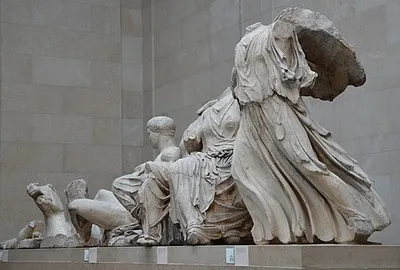
In the late 1930s, sculptures known as the Elgin Marbles, originally from the Parthenon in Athens and acquired by the British Museum in 1816, underwent aggressive cleaning. These sculptures had developed an orange-brown surface, or patina, which wealthy art collector Joseph Duveen wished to remove before their relocation to a new gallery he was financing. Despite previous, milder cleaning efforts that had been halted due to public criticism, Duveen pushed for more forceful methods. Between 1937 and 1938, some sculptures were cleaned using abrasive tools, with allegations of bribery to facilitate the process.
The unauthorized cleaning was eventually brought to the attention of the museum's director, who ordered it to stop and initiated an investigation. The findings confirmed significant damage. However, the museum's trustees attempted to downplay the scandal and conceal the extent of the damage and the affair. Several staff members involved were dismissed or induced to retire. Despite initial attempts to suppress information, press reports in early 1939 brought the scandal to public attention. While public interest waned by Duveen's death, the museum continued to conceal evidence until the late 1990s. The incident has since been a point of reference in discussions about the potential restitution of the Elgin Marbles to Greece.
Acquisition and Early Conservation of the Parthenon Sculptures
The Parthenon sculptures, known as the Elgin Marbles, were acquired by the British Museum in 1816 after being removed from the Acropolis of Athens by Lord Elgin between 1801 and 1811. These fifth-century BCE artifacts, originally painted, developed an orange-brown surface coloration known as patina over time. Debates arose in the 19th century regarding whether this patina was ancient or a result of age. The British Museum's conservation efforts were irregular; early attempts to clean the marbles with strong agents like sulfuric acid were met with public disapproval. Concerns about the sculptures' surface, stained by coal-fired heating systems, led to investigations and the use of alkaline solutions and clay poultices. Public criticism regarding the removal of patina, seen by some as a sign of age and antique beauty, persisted, with one letter to The Times lamenting the scrubbing of the marbles with "vile compounds."
The Duveen Gallery and the Aggressive Cleaning Incident
In 1928, art dealer Joseph Duveen offered to fund a new gallery for the Elgin Marbles at the British Museum. His motivation, according to historian William St Clair, was to gain status, while the museum sought to legitimize its possession of the artifacts. The existing display conditions were considered poor. Duveen advocated for aggressive cleaning methods to remove the patina, which he found unsightly. This led to unauthorized and damaging cleaning between 1937 and 1938, employing copper tools and abrasive carborundum. Allegations surfaced that museum staff were bribed to permit this work, and initial inaction by officials allowed it to continue.
The Scandal and Subsequent Cover-Up
The aggressive cleaning of the Elgin Marbles was discovered in September 1938, prompting the museum's director to halt the process and order an investigation. The findings revealed obvious and significant damage. Despite this, the museum administration attempted to minimize public awareness and protect its reputation. Key personnel involved in the cleaning or its supervision were dismissed or forced to resign. Although the director denied any connection between the dismissals and the cleaning, ensuing press reports in early 1939 brought the affair to light. The scandal continued to be a point of contention, and the museum reportedly concealed evidence related to it for decades, only holding a conference on the matter in 1999 following further research.
Key Ideas
- The philosophical implications of preserving or altering the patina on ancient sculptures.
- The tension between aesthetic ideals, conservation ethics, and the desire for public display.
- The role of powerful individuals and institutions in shaping historical narratives and controlling cultural heritage.
- The long-term consequences of institutional concealment and its impact on public trust and historical accuracy.
Notable Quotes
“the damage is obvious and cannot be exaggerated”
“sacrilege”
“very dirty; some of them appearing as if dirty from a deposit of dust and soot formed upon them, and some of them, as if stained, dingy, and brown”
“the tone given by time to antique sculpture”
“a man scrubbing away with some vile compound”
Books by Christopher A Faraone F S Naiden
0 free public domain books · Read online or download
