Christoph Markschies Schr Ter Jens
New Testament apocrypha are early Christian writings about Jesus and apostles, mostly non-canonical and debated throughout history.
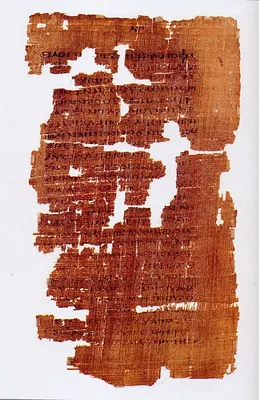
The New Testament apocrypha comprise a collection of early Christian writings that offer alternative accounts of Jesus, his teachings, and the lives of his apostles. While some of these texts were considered scripture by early believers, a consensus developed by the fifth century that limited the New Testament to the 27 books of the modern canon. These apocryphal texts are generally not recognized as biblical by Protestant churches. The term 'apocrypha' itself signifies 'hidden' or 'secret,' reflecting their non-canonical status. The development of the New Testament canon involved debates over authenticity, leading to the establishment of ordinations, creeds, and lists of primary documents. Books not included in these canons are now termed apocryphal. Scholarly efforts in the 19th and 20th centuries led to translations and serious study of these texts, with significant collections like the Nag Hammadi library offering insights into Gnostic traditions.
Defining Apocrypha and Related Terms
The term 'apocrypha' originates from the Greek word 'apokryptein,' meaning 'to hide away,' and generally refers to books considered useful but not divinely inspired by the church. It is important to note that classifying Gnostic writings as 'apocryphal' can be misleading, as they were not viewed in the same category by orthodox believers. Other terms used by early Christians and scholars include 'antilegomena,' meaning 'spoken against,' which sometimes applied to canonical books as well, and 'pseudepigrapha,' meaning 'falsely inscribed,' used for works attributed to apostles but written by anonymous authors. In Catholic and Orthodox traditions, texts considered 'apocrypha' by Protestants might be referred to as deuterocanonical books.
Historical Development of the Canon
The existence of New Testament apocrypha reflects the diverse responses to Jesus' ministry in early Christianity. Safeguarding the authenticity of his teachings involved establishing ordinations, creeds, and canons. The process of canon formation saw considerable debate, with books generally accepted if they were regarded as the earliest accounts. Works excluded from the canon, now called apocryphal, faced suppression and survive only in fragments or mentions. Early New Testament lists varied; for instance, the Book of Revelation was disputed by some, while the Shepherd of Hermas was considered genuine by others. Different church traditions also had distinct canons, such as the Syriac Peshitta, which initially excluded several books, and the Armenian Apostolic Church, which at times included the Third Epistle to the Corinthians.
Scholarly Study and Notable Gospels
Modern scholarship has actively engaged with the New Testament apocrypha, with significant translations and collections emerging in the 18th century and continuing into the present. The 19th century saw dedicated study by scholars like Constant von Tischendorf, leading to new translations. Texts from the Nag Hammadi library, often studied separately, are now included in scholarly editions. Among the apocryphal writings are various 'infancy gospels' detailing Jesus' childhood, none of which were canonized but remained popular, evidenced by numerous surviving manuscripts. Other categories include 'Jewish-Christian gospels,' reconstructed from Church Fathers' writings, and 'non-canonical gospels' such as the Gospel of Marcion and the Gospel of Thomas. A specific group of 'Passion Gospels' focuses on Jesus' suffering, while 'harmonized gospels' like the Diatessaron aimed to synthesize the canonical accounts.
Gnostic Texts and Esoteric Knowledge
The discovery of numerous Gnostic texts, particularly from the Nag Hammadi library, has shed light on esoteric traditions within early Christianity. These texts often take the form of dialogues where Jesus imparts hidden knowledge to his disciples in response to their questions, exploring Gnostic cosmology and ethics. An example of this style, though polemical against Gnosticism, is the Epistula Apostolorum. Notable Gnostic texts that engage with Jesus include the Apocryphon of James, the Book of Thomas the Contender, the Dialogue of the Saviour, the Gospel of Judas, the Gospel of Mary, and the Gospel of Philip. These writings represent a distinct stream of early Christian thought that sought deeper, often mystical, understanding beyond the canonical narratives.
Key Ideas
- New Testament apocrypha: Early Christian writings not included in the biblical canon.
- Canon development: The historical process of selecting canonical texts for the New Testament.
- Pseudepigrapha: Writings falsely attributed to prominent figures.
- Antilegomena: Texts that were disputed or 'spoken against'.
- Infancy gospels: Texts providing accounts of Jesus' childhood.
- Gnostic texts: Writings exploring esoteric cosmology and ethics, often in dialogue form with Jesus.
Books by Christoph Markschies Schr Ter Jens
0 free public domain books · Read online or download
