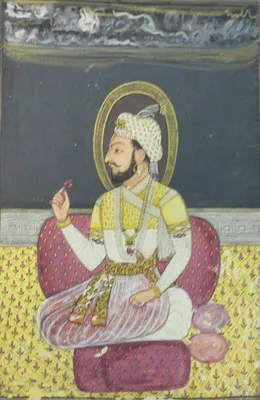
Christina Maharaj
Sambhaji, second Maratha king, faced internal strife and constant warfare, leading to his execution.
Sambhaji, the eldest son of Shivaji and the second ruler of the Maratha Empire, reigned from 1681 to 1689. His early life was marked by political maneuvering, including being held hostage by the Mughal Empire and escaping house arrest with his father. He ascended the throne after his father's death amidst conspiracies and challenges to his rule.
His reign was predominantly defined by continuous conflict with the Mughal Empire under Aurangzeb, as well as engagements with other regional powers. Sambhaji's military actions included raids into Mughal territory and the disruption of supply lines. However, his rule was also characterized by internal issues, such as suppressing plots against him, which led to executions of influential figures. Historians note that his personal issues and alleged war crimes committed by his soldiers overshadowed his administrative and military achievements. Despite these challenges, he implemented drought relief measures and continued his father's administrative systems. Sambhaji was also a scholar who authored works in Sanskrit and Hindustani. He was eventually captured and executed by Mughal forces in 1689, becoming a martyr figure for some and continuing the conflict through his successor.
Early Life and Political Entanglements
Born the eldest son of Shivaji, founder of the Maratha Empire, Sambhaji's early years were shaped by political events. At the age of nine, he was given as a hostage to the Mughal Empire to ensure his father's adherence to the Treaty of Purandar. This led to him accompanying his father to Agra, where both were placed under house arrest by Emperor Aurangzeb, from which they later escaped. Following this, he was confined by his father at Panhala Fort, with some accounts suggesting this was due to alleged personal indiscretions or transgressions. He later briefly defected to the Mughal Empire, serving under Diler Khan and participating in a battle against his father's forces.
Reign and Warfare
Sambhaji assumed the throne following his father's death, a period marked by intense conflict with the Mughal Empire and other regional powers, including the Siddi of Janjira and the Portuguese. His rule saw Maratha forces attacking Mughal supply lines and raiding territories, though they struggled to capture key forts. Early in his reign, Sambhaji uncovered and suppressed a plot to poison him, leading to the execution of several prominent individuals. By the mid-1680s, Mughal forces began to gain the upper hand, retaking strongholds. Sambhaji's strategies, such as burning villages to deny supplies to the Portuguese, alienated some of his own landowning nobles (deshmukhs).
Scholarly Pursuits and Legacy
Beyond his military and political activities, Sambhaji was also a scholar. He authored several works in Sanskrit and Hindustani, including the political treatise 'Budhbhushanam'. Despite his moderate administrative and military successes, his reign is often overshadowed in historical accounts by his personal issues and the atrocities committed by his soldiers, which included massacres and rape. Nevertheless, his eventual capture and execution by the Mughals elevated him to the status of a martyr. He remains a popular figure among some Hindu nationalists in modern India.
Books by Christina Maharaj
1 free public domain book · Read online or download