Chiara Capitani
Naples, an ancient city founded by Greeks, has been a significant cultural and political center throughout history, influencing arts and philosophy.
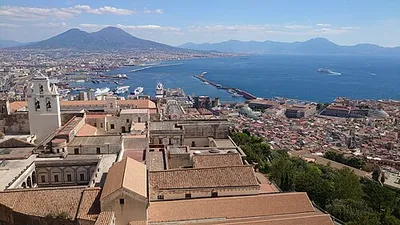
Naples, the capital of Campania in southern Italy, is one of the world's oldest continuously inhabited urban areas. Founded by Greeks in the first millennium BC as Parthenope and later refounded as Neapolis, it became a vital part of Magna Graecia and a significant cultural hub where Greek and Roman societies merged. The city served as a capital for various kingdoms, including the Duchy of Naples, the Kingdom of Naples, and the Kingdom of the Two Sicilies, until Italy's unification. Naples has been a cradle of artistic and intellectual movements, from the Baroque period influenced by Caravaggio to humanism, the Enlightenment, and a renowned Neapolitan School of classical music and opera. Its historic center is a UNESCO World Heritage Site, reflecting its immense cultural, artistic, and monumental richness. The city also boasts ancient educational institutions and a distinctive culinary tradition, most famously pizza.
Naples's history is deeply rooted in its Greek origins, evolving into a Roman colony that maintained its Hellenistic culture. It later fell under Byzantine influence, eventually establishing an independent Duchy of Naples that switched allegiance from Constantinople to Rome. Despite periods of external control, including by the Ostrogoths and Normans, Naples retained its cultural identity. The city's strategic importance and cultural output continued through various historical epochs, making it a persistent global point of reference in arts, music, and philosophy.
Ancient Origins and Cultural Fusion
Naples traces its origins to the first millennium BC, initially founded by Greeks as Parthenope on the Pizzofalcone hill. It was later refounded as Neapolis and became a prominent city within Magna Graecia. The city played a crucial role in the synthesis of Greek and Roman cultures, establishing itself as an international center for the arts from its early days. During the Roman era, Neapolis was respected for its Hellenistic heritage, with its inhabitants preserving their Greek language and customs. The city was enhanced with Roman infrastructure like villas and aqueducts, and it attracted Roman emperors who chose it for holidays. Notably, the epic poet Virgil received part of his education and resided in the Naples area. Christianity first appeared in Naples during this period, with traditions mentioning visits by the apostles Peter and Luke, and the city became the site of martyrdom for its patron saint, Januarius.
Seat of Power and Artistic Flourishing
Throughout its long history, Naples served as a significant political capital. It was the seat of the Duchy of Naples from 661 to 1139, later becoming the capital of the Kingdom of Naples (1282–1816) and ultimately the Kingdom of the Two Sicilies until the unification of Italy in 1861. The city is considered a pivotal center for the Baroque artistic movement, particularly influenced by the 17th-century artist Caravaggio and the artistic revolution he sparked. Naples was also an important hub for humanism and the Enlightenment. Its contributions to classical music and opera through the Neapolitan School have been globally recognized, influencing the development of opera buffa and modern conservatory systems. The city fostered a unique theatrical tradition and a rich musical heritage, including the internationally popular Neapolitan song.
Cultural Heritage and Enduring Influence
Naples's historic city center is recognized as a UNESCO World Heritage Site, a testament to its dense concentration of cultural, artistic, and monumental resources. The city has been described as possessing "too much history to handle." Beyond its immediate historical core, the region boasts significant nearby sites, including the Royal Palace of Caserta and the Roman ruins of Pompeii and Herculaneum. In the visual arts, Naples has been a source of original movements such as the Neapolitan Renaissance and Baroque, Caravaggism, and various schools like Posillipo and Resina, as well as Neapolitan Liberty (Art Nouveau). Its applied arts, including Capodimonte porcelain and the Neapolitan nativity scene (presepe), have also achieved international acclaim. Furthermore, Naples is celebrated for its distinctive culinary traditions, with pizza being a globally recognized icon, and the art of its pizzaiolo is inscribed on UNESCO's Intangible Cultural Heritage list.
Books by Chiara Capitani
1 free public domain book · Read online or download